Situation guide · School
My child refuses to go to school
A child who refuses school is not lazy. Most often, they are afraid of something they cannot put into words: the noise, a classmate, a subject, separation.
In brief
In the moment: acknowledge the fear without arguing, keep the morning routine, offer one step rather than the whole day, and contact the school today. Once things are calm, identify what triggers it, and prepare for next time with a visual board adapted to your child.
- Autism
- ADHD
- Learning differences
- Ages 3 to 16
Updated

In the moment
Right now
Acknowledge the fear without arguing.
“I can see this morning is hard.” Reasoning with them now won’t help.
Keep the morning routine.
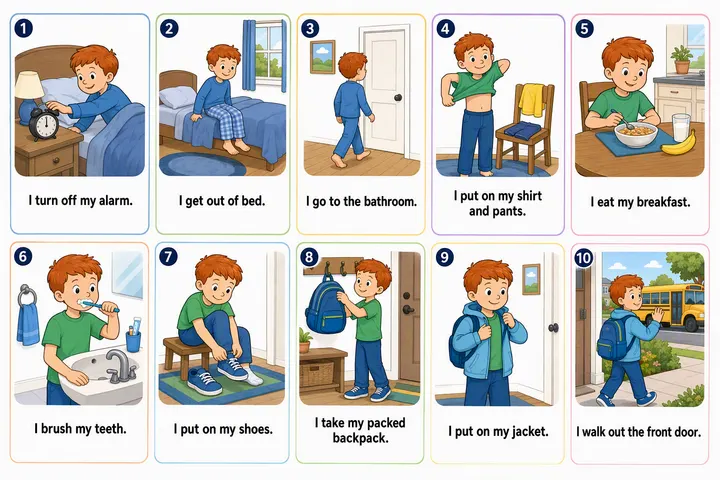
Wake up, get dressed, breakfast, like other days. Routine reassures.
Offer one step rather than the whole day.
“We’ll walk to the gate together.” A small step that feels possible.
Contact the school today.
The teacher can plan a gentler arrival: an adult waiting, a quiet spot.
In the evening, talk about it calmly.
Not during the crisis. With drawings or pictures if words are hard: what is difficult there?
What often makes it worse
- Punishing them for being afraid.
- Letting them stay home with screens: home becomes more appealing than school.
- Waiting for it to pass on its own: the longer refusal lasts, the harder the return.
Understanding it
Why it happens
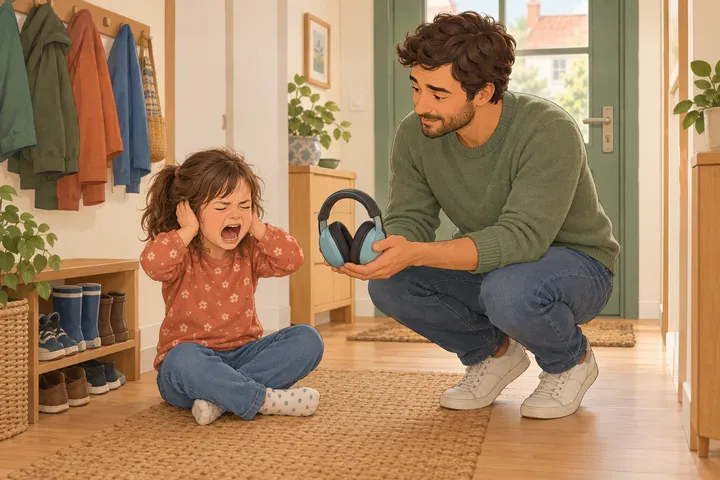
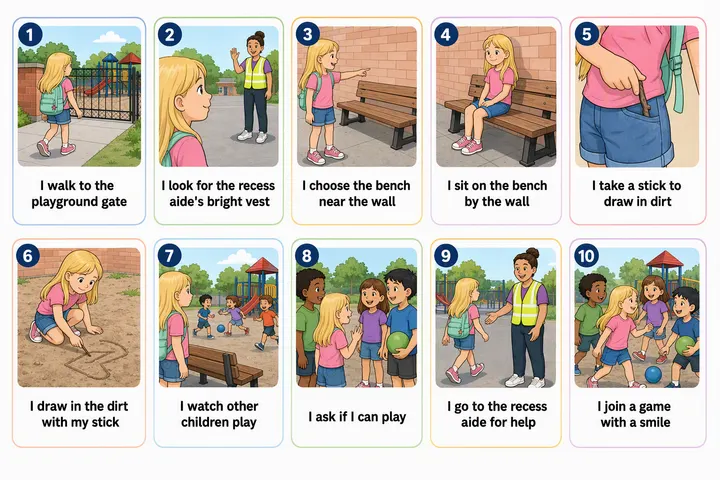
Too much noise, too many people
What it looks like
Cafeteria, recess, hallways: they come home exhausted or angry.
What helps
Ask the school for a quiet space, headphones, an earlier lunch slot.
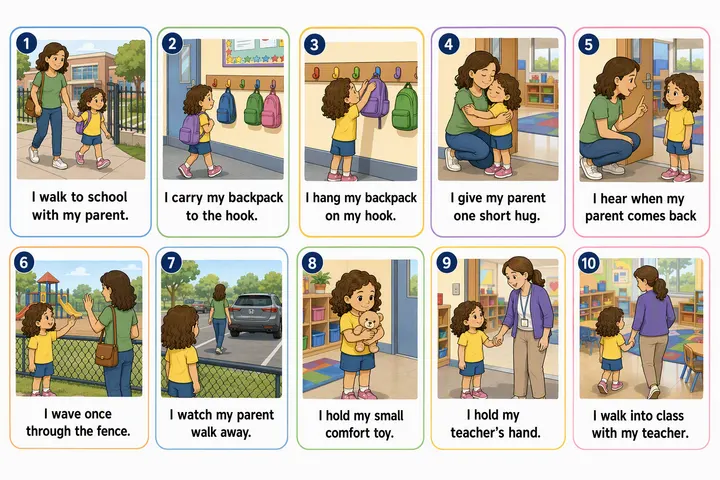
Leaving you
What it looks like
Separation is what blocks. Once there, it goes fine.
What helps
A short goodbye that never changes, a small object from home in the backpack.
Something happening there
What it looks like
A classmate, teasing, an adult, a subject.
What helps
Talk with the teacher, and explore with your child, using pictures if needed.
The work is too hard
What it looks like
They say “I’m dumb,” refuse mostly on certain days or subjects.
What helps
Accommodations exist (504 plan, IEP). An evaluation can identify a learning difference.
When to mention it to your pediatrician
Some signs are worth showing your child’s doctor, to check that pain or another cause isn’t behind it.
- They often have stomach aches or headaches, especially in the morning and on Sunday evening.
- The refusal lasts more than a few days, or keeps coming back.
- They sleep poorly, eat less, or seem sad or very anxious.
- They mention teasing, exclusion or bullying.
- They say they want to disappear: talk to their doctor promptly, without waiting for the next appointment.
When things are calm
For next time
- Question 1 of 3, current
- Question 2 of 3
- Question 3 of 3
Question 1 of 3
Which moment is hardest?
The board prepares and reassures. Refusal that lasts needs a plan with the school and a professional: the earlier it starts, the easier the return.
Available supports
Library boards and templates suited to this situation, usable right away.
For you
And you, this morning?
Refusal mornings are exhausting, often with work waiting, other people’s judgment, and worry about the future. You are not alone: school refusal is common, and it can be worked on with the school and a professional.
If it keeps happening
A parent training program
- Triple PA general program, also available online.
- BarkleyChildren with ADHD: organization and school.
This guide is educational, not medical. It does not replace your child’s doctor or the team that supports your child.