Situation guide · Meltdowns and behavior
My child hurts themselves
It’s very hard to watch, and it’s not your fault. Hitting, biting or scratching themselves is often a way of coping with something too strong: pain, an emotion, overload.
In brief
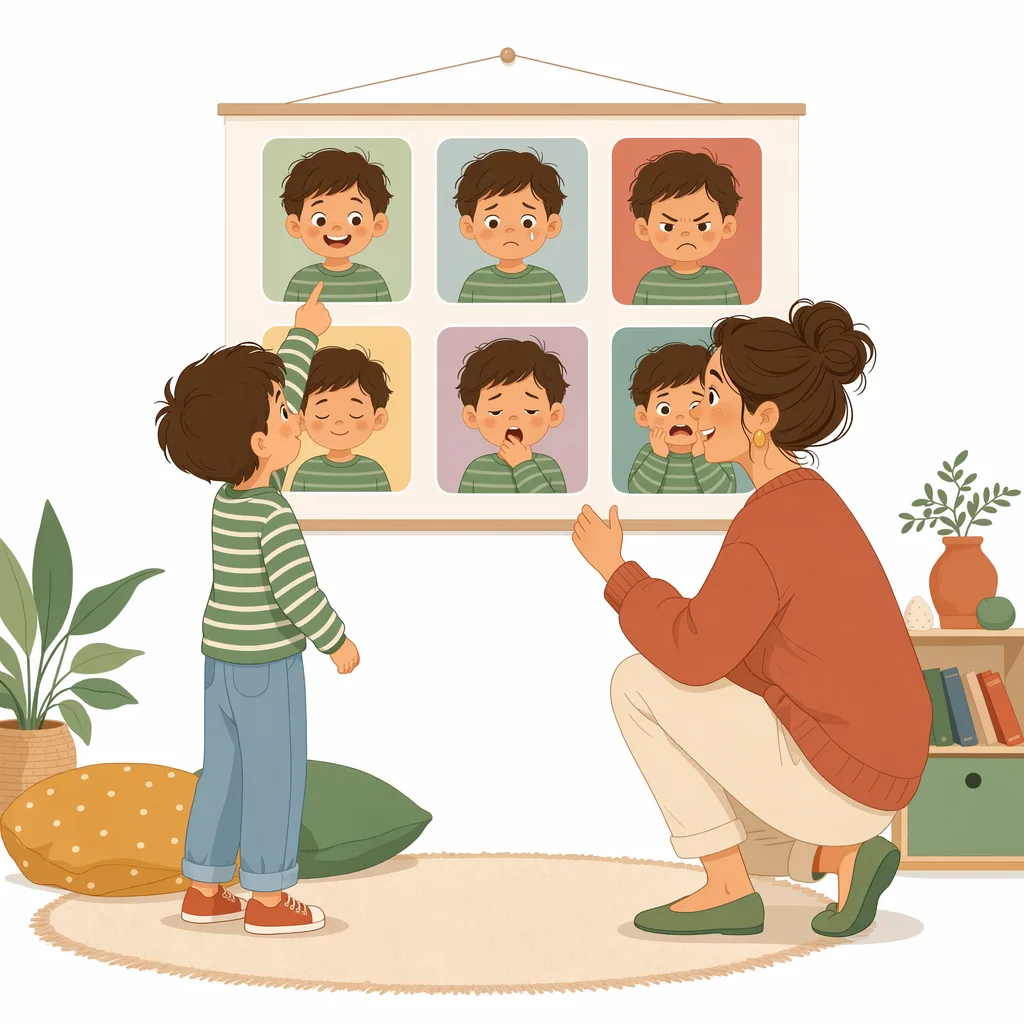
In the moment: protect what they’re hitting, stay calm and close, with few words, reduce what’s around them, and offer something to squeeze or chew. Once things are calm, identify what triggers it, and prepare for next time with a visual board adapted to your child.
- Autism
- Diagnosed or not
- Ages 2 to 16
Updated
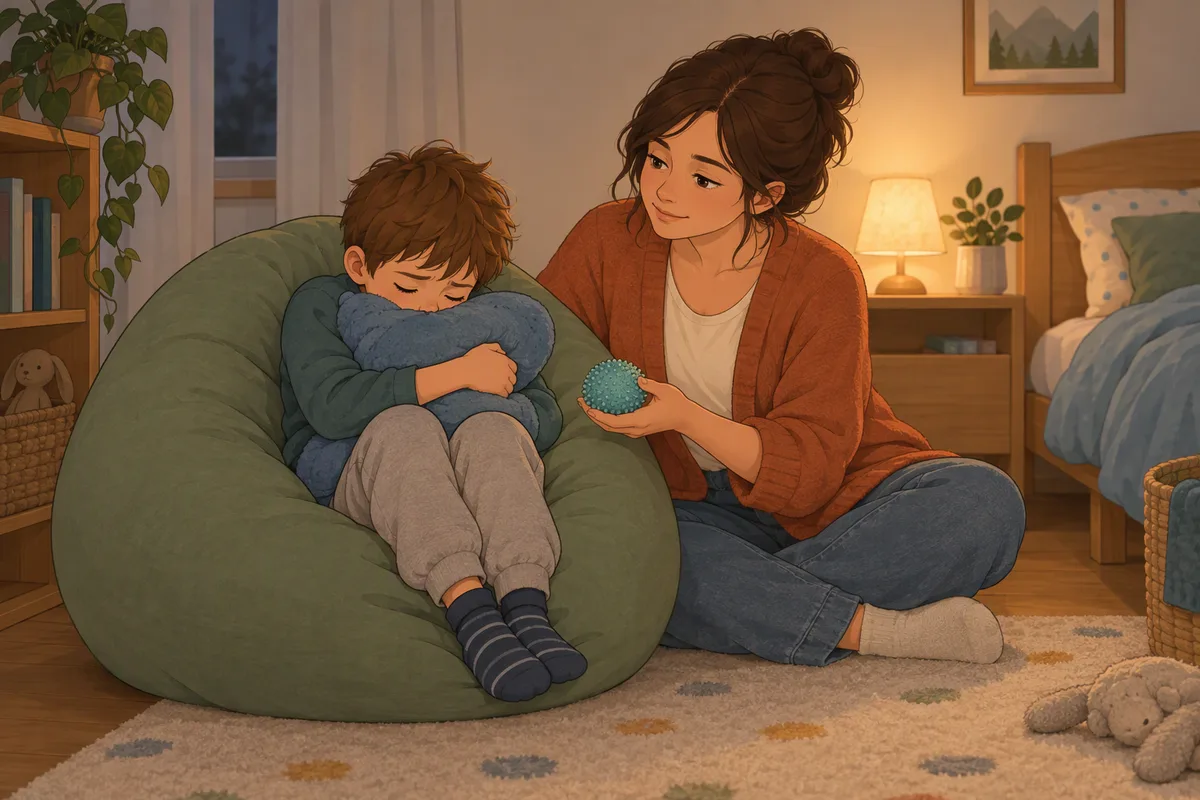
In the moment
Right now
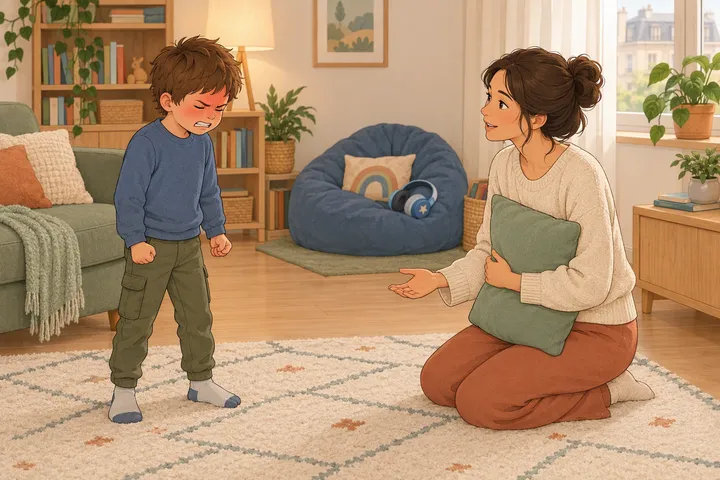
Protect what they’re hitting.
A cushion between their head and the wall or table. Move hard or sharp things away.
Stay calm and close, with few words.
A low voice, a short sentence: “I’m here.” A big reaction can make it last longer.
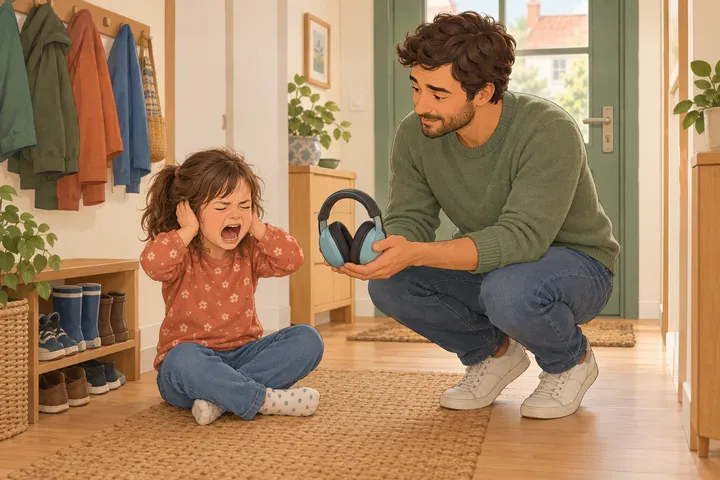
Reduce what’s around them.
Less noise, less light, fewer people in the room.
Offer something to squeeze or chew.
A cushion, a soft ball, a chew toy made for it. Without forcing.
Once calm, check for injuries.
Look gently. Note what happened just before: it matters for what comes next.
What often makes it worse
- Scolding or shaming them.
- Holding them tightly, except to prevent injury: restraint often raises the tension.
- Reacting very strongly, shouting, panicking: staying neutral helps it stop.
Understanding it
Why it happens
“I’m in pain”
What it looks like
They hit their head, ear or cheek with no visible trigger.
What helps
Think of teeth, ears, stomach, headaches, and talk to the pediatrician.
“It’s too much”
What it looks like
Noise, crowds, tiredness, or an emotion that overflows.
What helps
Spot the early signs, plan a quiet corner and breaks.
“I can’t say it”
What it looks like
It happens when they want something, or want something to stop.
What helps
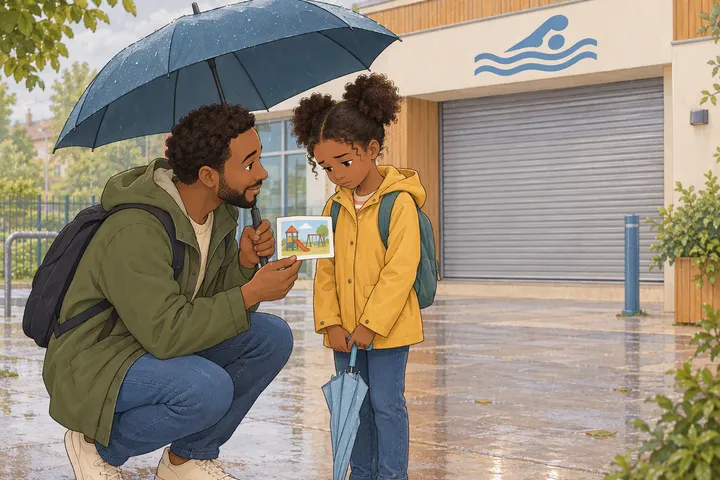
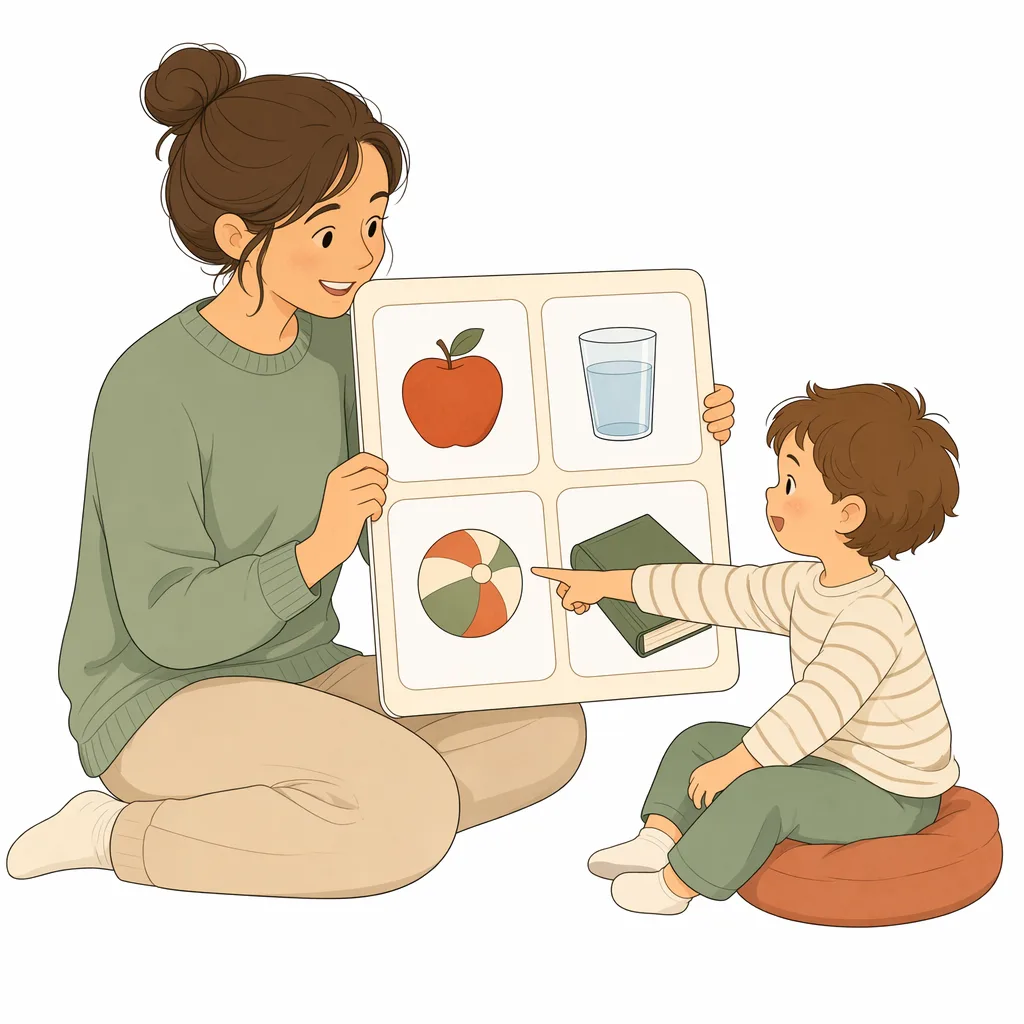
Teach a simple way: a word, a gesture, a “help” or “break” card.
“It feels good”
What it looks like
A repeated movement, more when bored, waiting or falling asleep.
What helps
Offer a similar, safe sensation: pressure, a chew toy, movement.
When to mention it to your pediatrician
Some signs are worth showing your child’s doctor, to check that pain or another cause isn’t behind it.
- It’s the first time, or it’s becoming more frequent or more intense.
- They have marks that last: bumps, wounds, redness.
- They always hit the same spot (ear, cheek, head): it can be a sign of pain.
- It happens mostly at night, or with no trigger at all.
- It worries you, or you don’t know what to do anymore: that’s reason enough.
When things are calm
For next time
- Question 1 of 3, current
- Question 2 of 3
- Question 3 of 3
Question 1 of 3
Most often, it happens when…
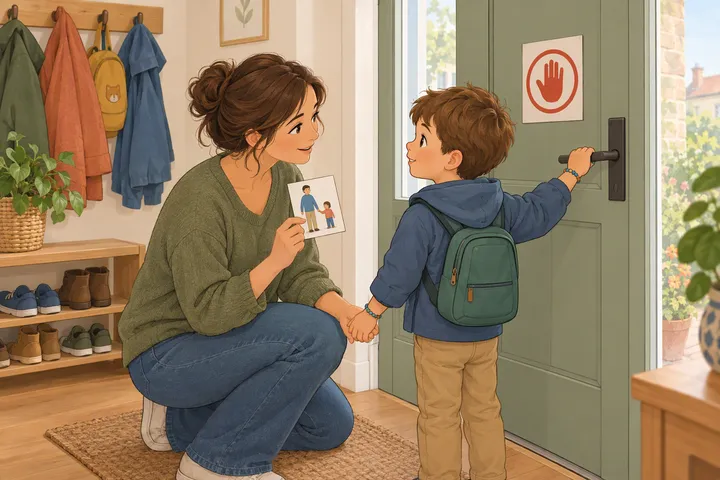
A board helps teach, at calm times. If these behaviors last, a professional opinion is always worthwhile: your child’s care team and parent training programs are there for that.
Available supports
Library boards and templates suited to this situation, usable right away.
For you
And you, how are you coping?
Watching your child hurt themselves is one of the hardest things there is. Worry, helplessness, sometimes guilt are all normal. You don’t have to carry it alone: talking to a professional and to other parents helps.
If it keeps happening
A parent training program
- RUBIFor autistic children with challenging behavior. 11 to 14 sessions.
- PCITAges 2 to 7, behavior problems. A therapist coaches you live.
- CST (WHO)Ages 2 to 9, autism or developmental delay.
This guide is educational, not medical. It does not replace your child’s doctor or the team that supports your child.