Situation guide · Meltdowns and behavior
My child hits me
You are not a bad parent, and your child is not a bad kid. A child who hits is often saying “this is too much” with the only tool they have in that moment. And you are allowed to protect yourself.
In brief
In the moment: step back, protect yourself, never hit back, move siblings and hard objects away, and few words, low voice. Once things are calm, identify what triggers it, and prepare for next time with a visual board adapted to your child.
- Autism
- ADHD
- Diagnosed or not
- Ages 3 to 16
Updated
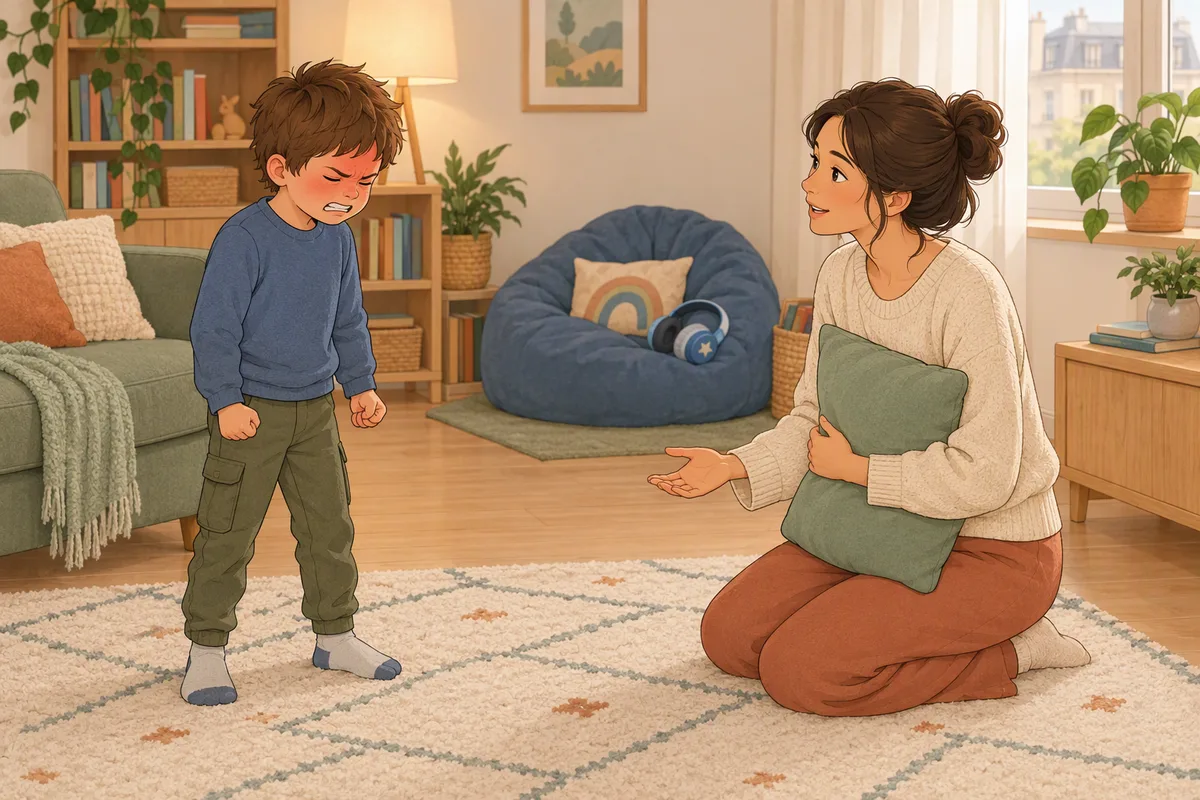
In the moment
Right now
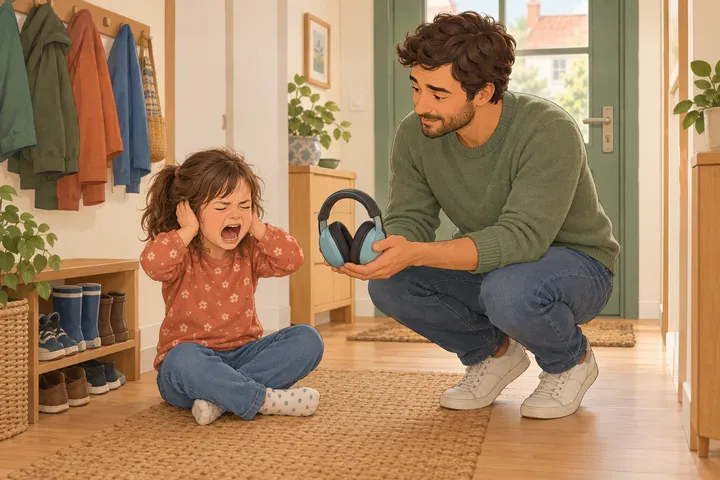
Step back.
Move one or two steps out of reach. You are not abandoning them, you are removing a target.
Protect yourself, never hit back.
A cushion between you, arms in front of your face. Never return a hit, even a light one.
Move siblings and hard objects away.
Take brothers and sisters to another room if needed.
Few words, low voice.
“Stop. I won’t let you hurt me. I’m here.” Then silence.
Wait until it’s fully over to talk.
Calming down often takes longer than the meltdown itself. Talk about it later, simply.
What often makes it worse
- Punishing or yelling during the meltdown.
- Holding them down, unless there is immediate danger: the meltdown often gets worse and someone can get hurt.
- Demanding an apology right away.
Understanding it
Why it happens
“It’s too much”
What it looks like
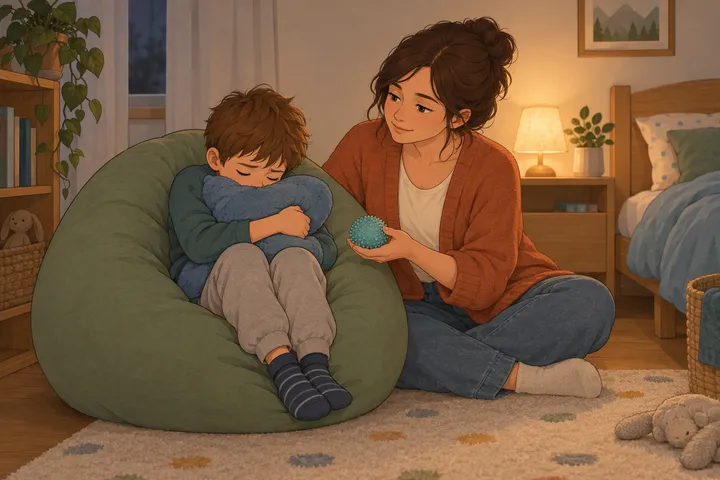
Noise, crowds, tiredness: tension builds, then explodes. They hit whoever is closest, often you.
What helps
Spot the early signs and leave before it peaks.
“I don’t want to”
What it looks like
It happens when you ask something or take something away.
What helps
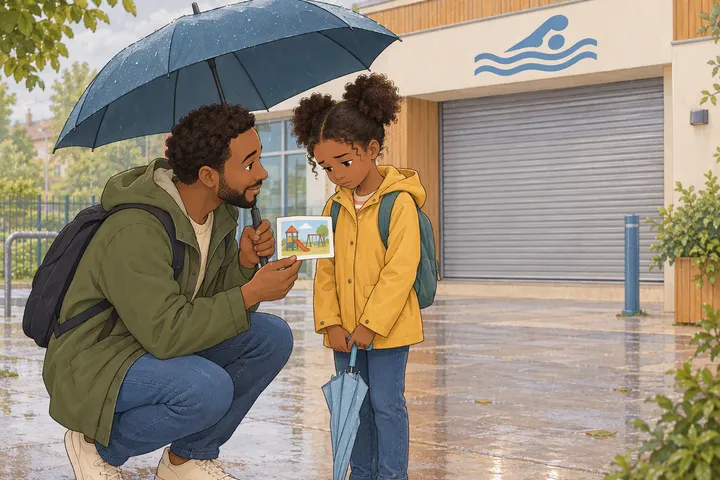
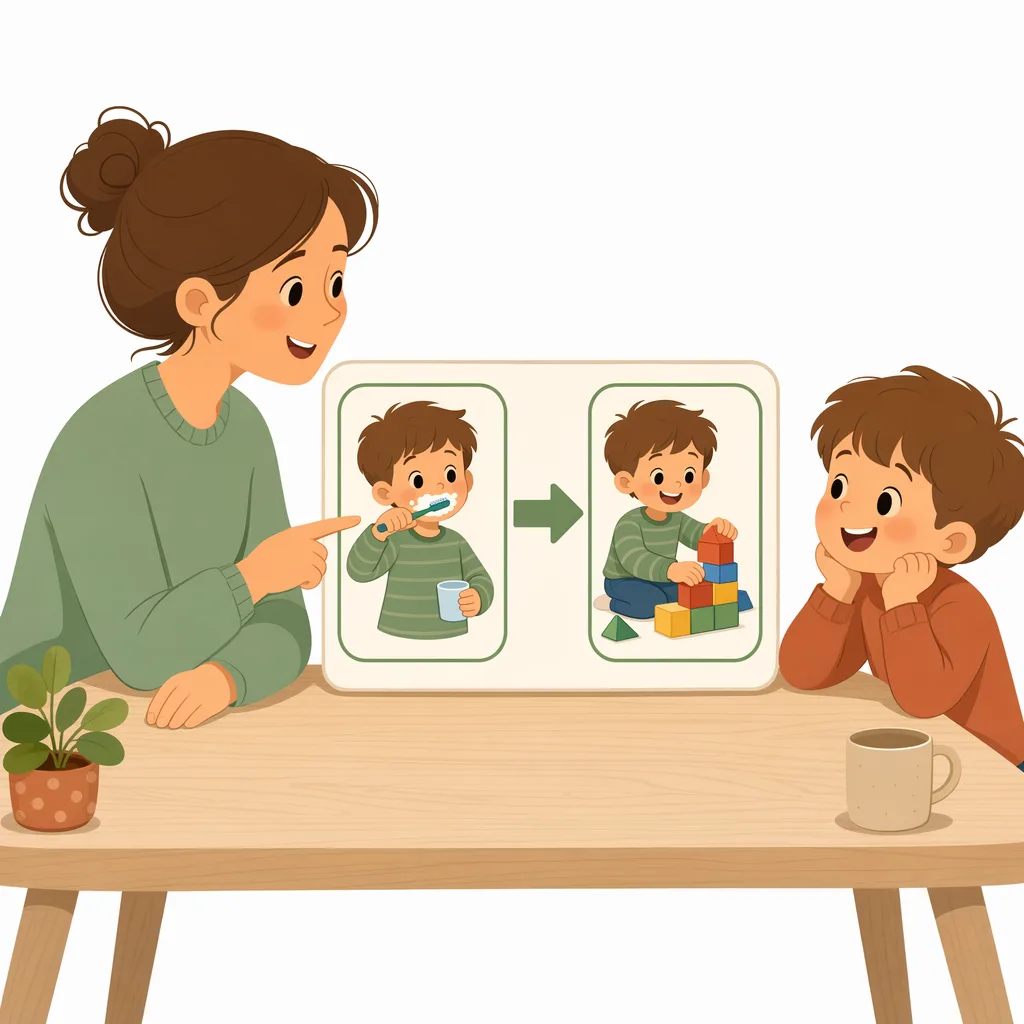
Give a warning, offer a choice, teach another way to say no.
“I can’t say it”
What it looks like
They speak little, or stop speaking when upset.
What helps
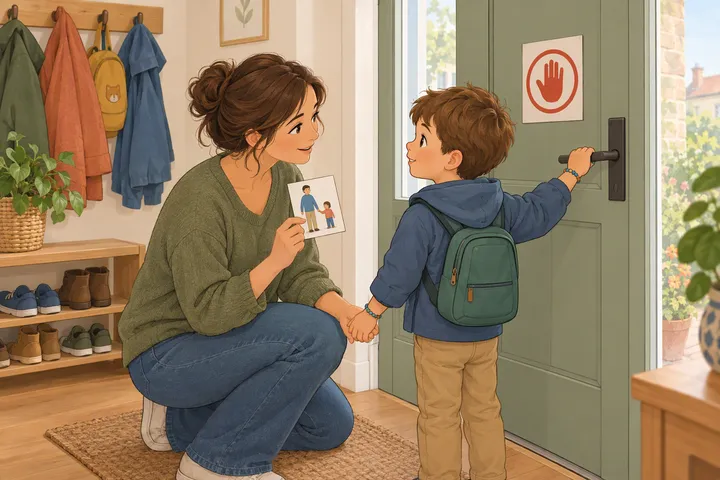
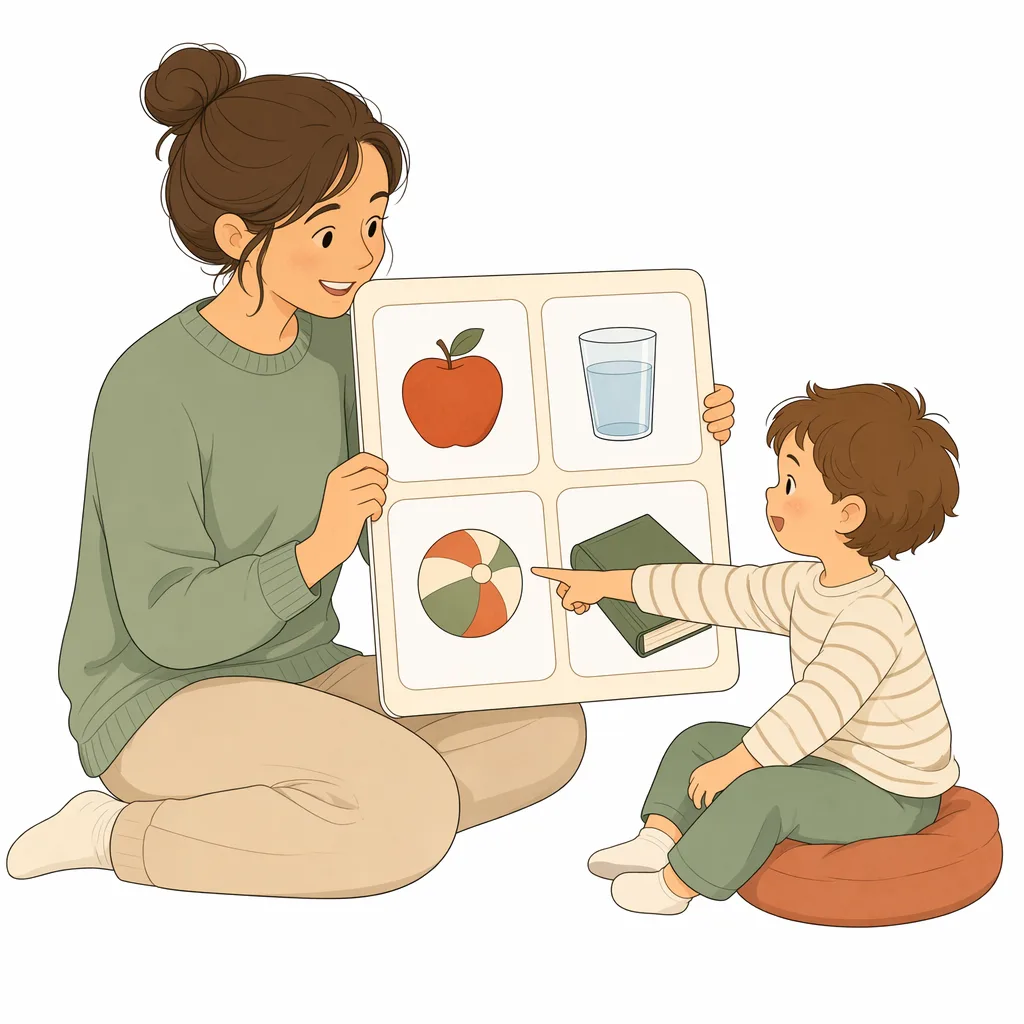
Give them a simple tool: a word, a “break” card, a gesture.
“I’m in pain”
What it looks like
Sudden hitting with no trigger, or aimed at their own head.
What helps
Think of pain (teeth, ears, stomach) and mention it to the pediatrician.
When to mention it to your pediatrician
Some signs are worth showing your child’s doctor, to check that pain or another cause isn’t behind it.
- The hitting is new, or getting more frequent or harder.
- They also hurt themselves: biting, hitting their own head.
- It mostly happens with one person or in one place.
- You feel afraid, or you avoid certain moments because of it.
- Someone got hurt: have the injury checked, and tell your child’s doctor.
When things are calm
For next time
- Question 1 of 3, current
- Question 2 of 3
- Question 3 of 3
Question 1 of 3
Most often, they hit when…
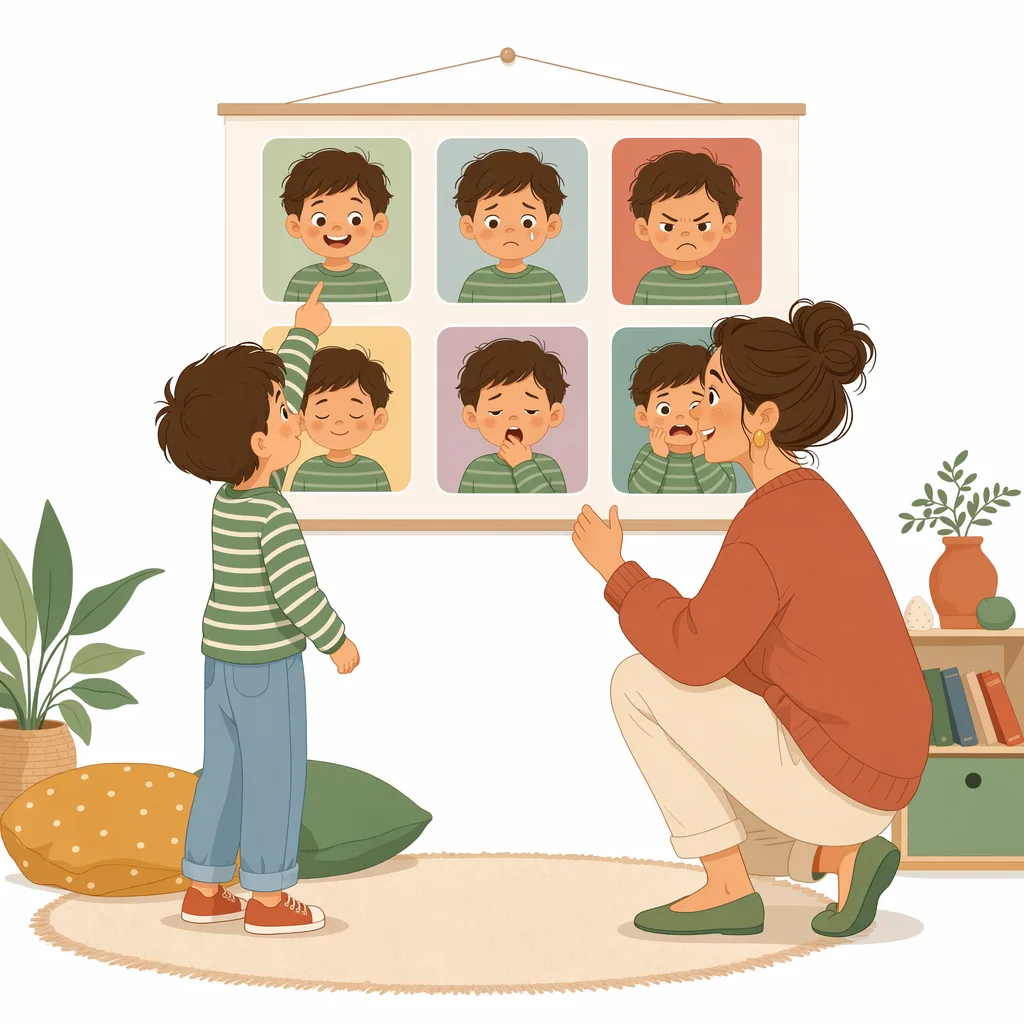
A board helps teach, at calm times. If hitting is frequent or frightening, a parent training program or a professional is needed. Asking for help is not failing.
Available supports
Library boards and templates suited to this situation, usable right away.
For you
And you, afterwards?
Being hit by your child leaves marks: sadness, shame, sometimes fear. Many parents tell no one. Talking about it, to a professional or to other parents living the same thing, is often the first step. And if you ever feel your own anger rising, putting your child somewhere safe and stepping out for a few minutes is protection, not abandonment.
If it keeps happening
A parent training program
- PCITParent-Child Interaction Therapy, ages 2 to 7. A therapist coaches you live.
- RUBIFor autistic children with challenging behavior. 11 to 14 sessions.
- Triple PA general program, also available online.
This guide is educational, not medical. It does not replace your child’s doctor or the team that supports your child.