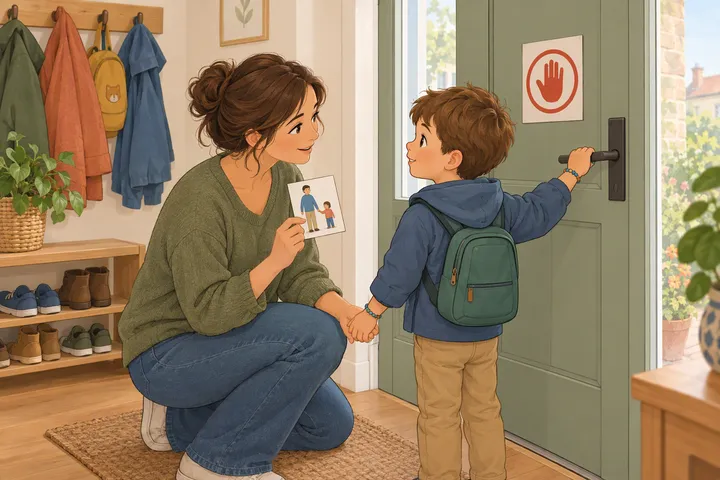
Situation guide · Meltdowns and behavior
My child screams and won’t stop
It’s not a tantrum, and it’s not your fault. A child who screams for a long time is usually an overwhelmed child with no other way to say it.
In brief
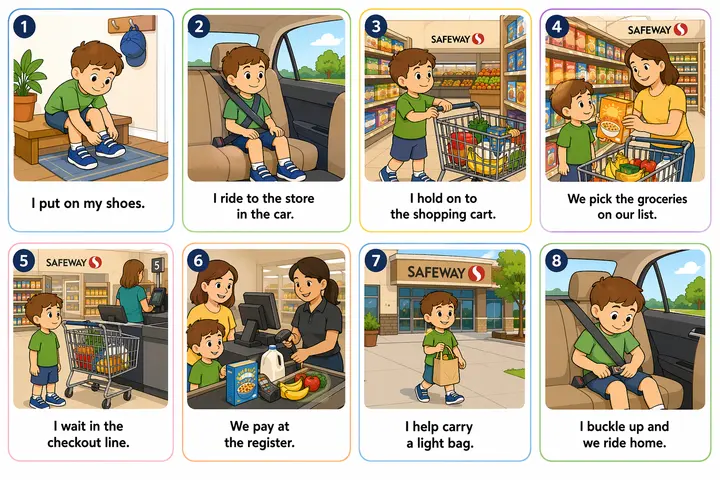
In the moment: make sure nobody can get hurt, turn everything down: your voice, the lights, the noise, say little. One short sentence, always the same, and offer what usually soothes them, without insisting. Once things are calm, identify what triggers it, and prepare for next time with a visual board adapted to your child.
- Autism
- ADHD
- Diagnosed or not
- Ages 2 to 12
Updated
In the moment
Right now
Make sure nobody can get hurt.
Move hard objects away, take siblings elsewhere. That’s the priority.
Turn everything down: your voice, the lights, the noise.
An overwhelmed brain can’t process words. The less input, the faster it settles.
Say little. One short sentence, always the same.
“I’m here. You’re safe.” Questions and reasoning add load.
Offer what usually soothes them, without insisting.
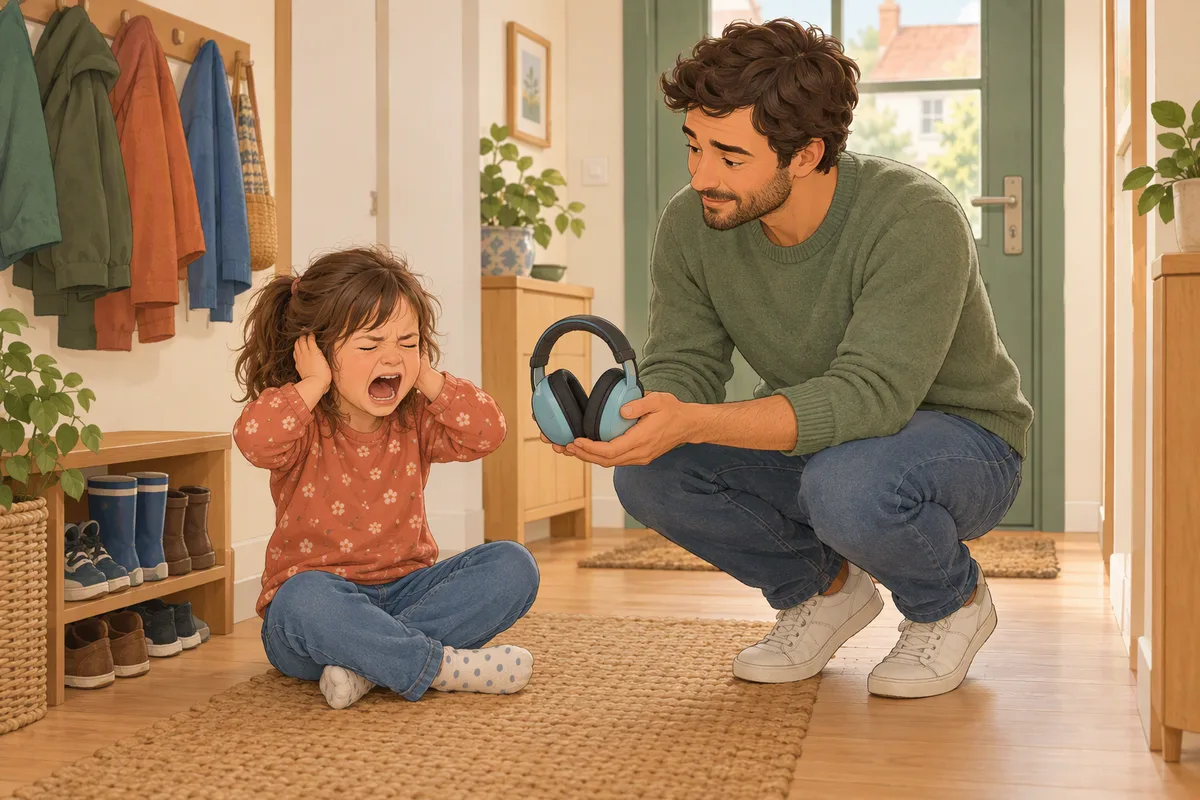
Headphones, comfort object, quiet corner. If they refuse, just stay close.
Wait, and breathe slowly yourself.
Your calm comes across better than your words. Every meltdown ends.
What often makes it worse
- Scolding or punishing during the meltdown: they can’t hear you.
- Holding or touching them if they can’t stand it, unless there is immediate danger.
- Asking “why”: they often don’t know, and not now.
Understanding it
Why it happens
Too much noise, light, people
What it looks like
They cover their ears, close their eyes, try to escape. More common in stores, parties, the cafeteria.
What helps
Headphones, shorter outings, a quiet corner planned ahead.
A change they didn’t see coming
What it looks like
It explodes when leaving, stopping a game, or when the route changes.
What helps
Warn ahead, show what comes next, use a visual timer.
A demand that’s too hard
What it looks like
It starts when asked to do something: get dressed, tidy up, homework.
What helps
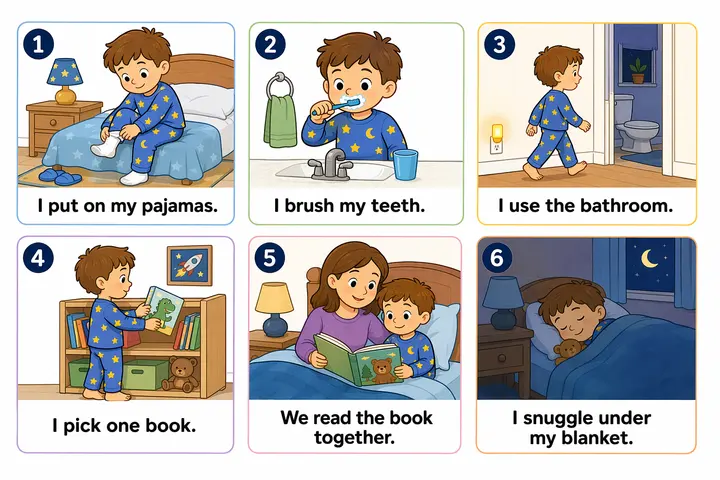
Break it into small steps, one at a time, with a picture for each.
Pain, hunger or tiredness
What it looks like
No visible trigger, louder than usual, at the end of the day or at night.
What helps
Check basic needs. If it lasts, ask the pediatrician: pain is a common cause in children who speak little.
When to mention it to your pediatrician
Some signs are worth showing your child’s doctor, to check that pain or another cause isn’t behind it.
- The screaming is new, or much more frequent lately.
- They hold a body part while screaming: ear, stomach, mouth, head.
- They sleep or eat much less than before.
- It happens mostly at night or on waking.
- They hit their head or got hurt during a meltdown: have it checked.
When things are calm
For next time
- Question 1 of 3, current
- Question 2 of 3
- Question 3 of 3
Question 1 of 3
When does the screaming happen most?
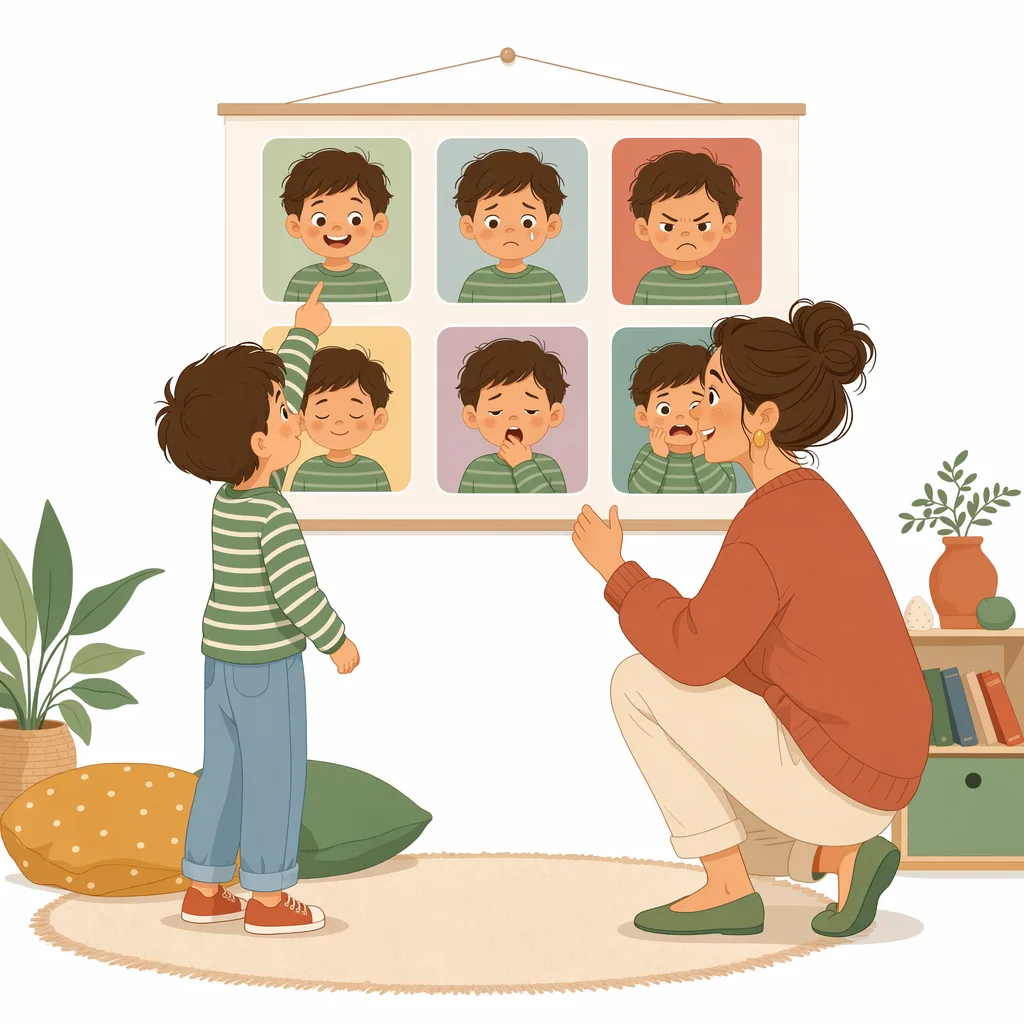
A board prepares and reassures. It doesn’t replace a professional if meltdowns are frequent, violent, or changing.
Available supports
Library boards and templates suited to this situation, usable right away.
For you
And you, how are you holding up?
Screaming that goes on and on is exhausting. In a 2025 survey of 115 families, long-term exhaustion was the moment parents felt most helpless, even more than the meltdowns themselves. You’re allowed to be at the end of your rope, and to ask for help.
If it keeps happening
A parent training program
- RUBIFor autistic children with challenging behavior. 11 to 14 sessions.
- Triple P, Incredible YearsGeneral programs, available before any diagnosis.
- CST (WHO)Ages 2 to 9, autism or developmental delay. Free materials.
This guide is educational, not medical. It does not replace your child’s doctor or the team that supports your child.