Loading…

FREN
Parent guide
Guides for the moments when you no longer know what to do: what helps right away, why it happens, and a visual board to prepare for next time. When a difficulty keeps coming back, the way to a structured parent training program.
Guides
Frequent topic
What helps at each bathroom moment, model sequences to adapt to your child, and how to prevent the AI from blocking a board.
Read the guide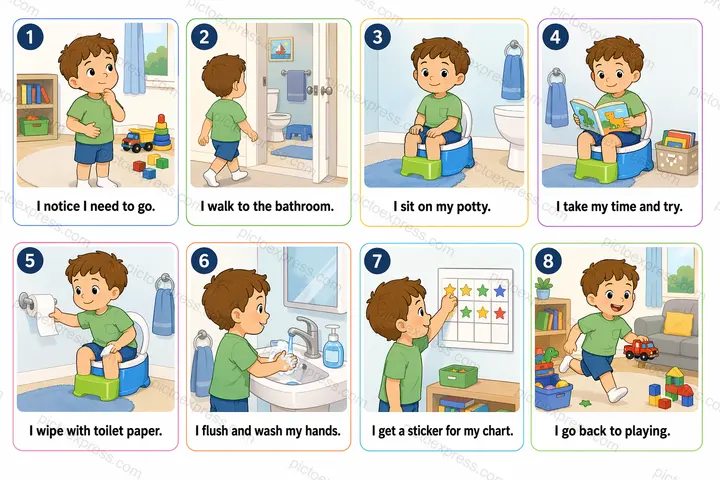
When it overflows.





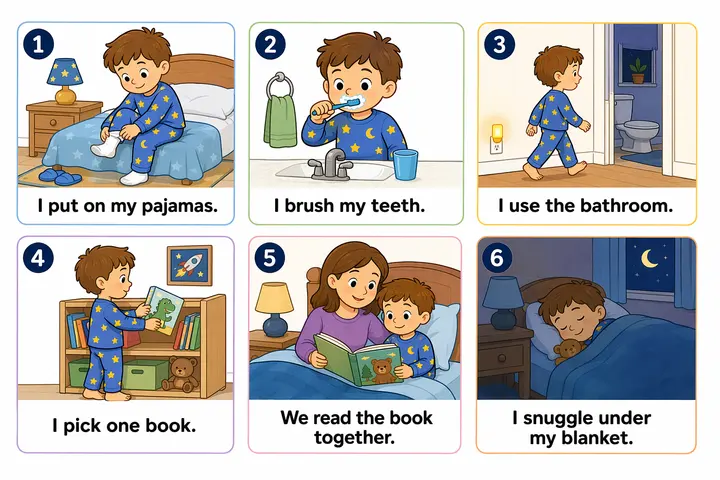
Sleep, meals, instructions, getting dressed, teeth.





The store, the doctor, the hairdresser.



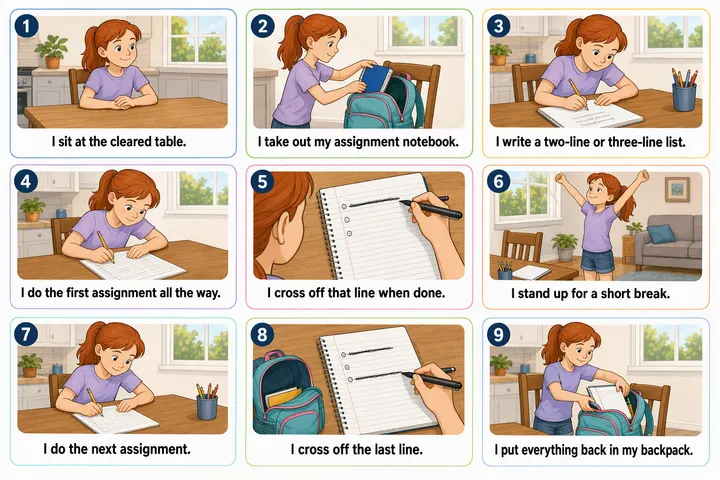
Mornings and homework.


How the guides work
Five steps you can read in twenty seconds, to help your child come back down.
The most common causes, to recognize your child’s.
Three questions, then a board drawn for your child, to look at together when things are calm.
The guidance is fixed text: it does not change from one visit to the next. Artificial intelligence is used for one thing only: drawing the board for your child, which you review before printing.
Going further
Behavior problems, ages 2 to 7
12 to 20 sessions, parent and child together, coached live
All children, ages 0 to 16
Several levels, including online
All children, ages 0 to 12
12 or more group sessions
Autism with challenging behavior
11 to 14 individual sessions
ADHD and oppositional behavior
8 to 10 sessions, group or individual
Autism, up to age 10
12 sessions over 6 months
Autism or developmental delay, ages 2 to 9
9 group sessions and home visits
Language delay
Group program led by a speech-language pathologist
For you
Caregiver exhaustion is the difficulty parents of autistic and ADHD children report most often. Being worn out does not mean you lack courage. Asking for support for yourself is part of supporting your child.