Situation guide · Meltdowns and behavior
My child runs off
Many parents of autistic children live with this worry, and it says nothing about your parenting. Children usually run toward something they love or away from something that’s too much, not away from you.
In brief
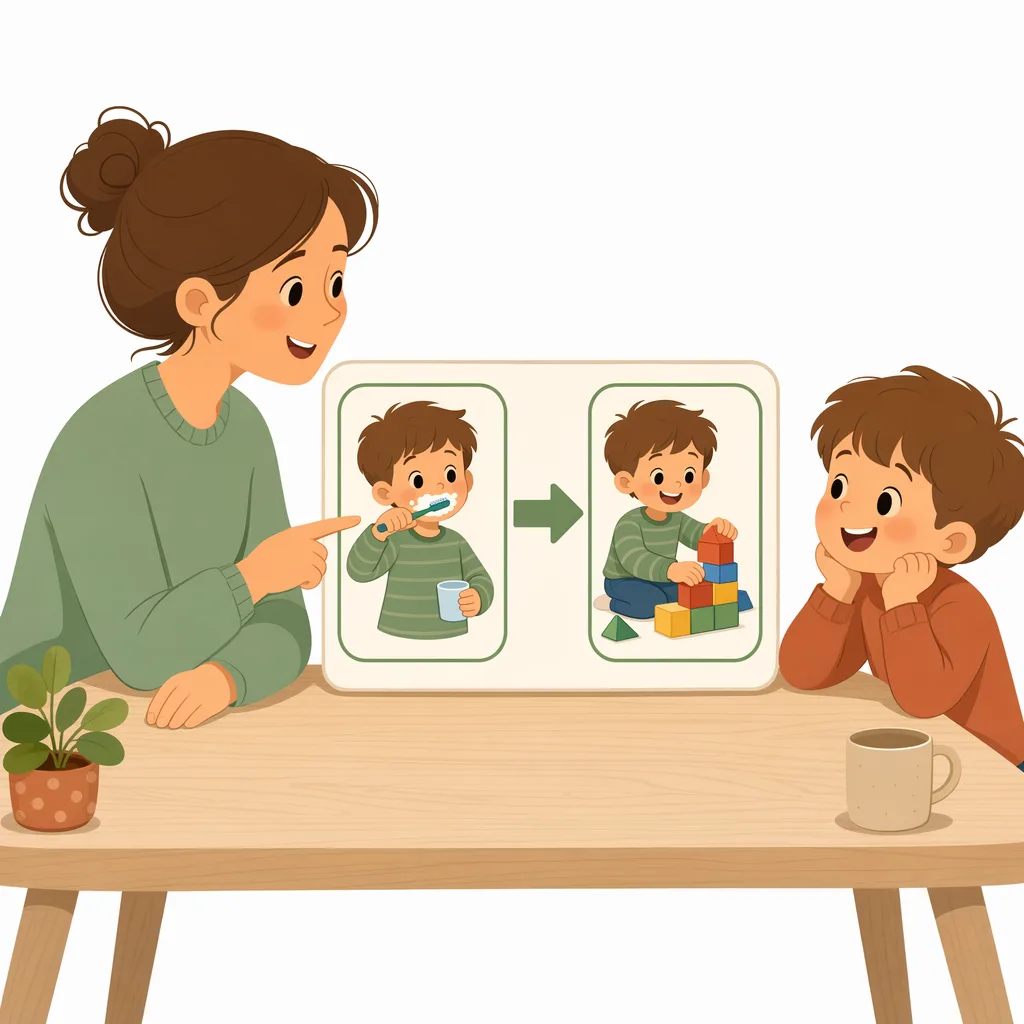
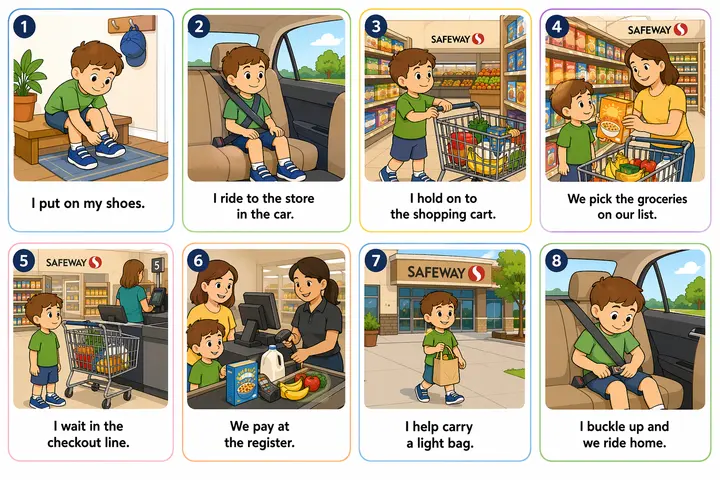
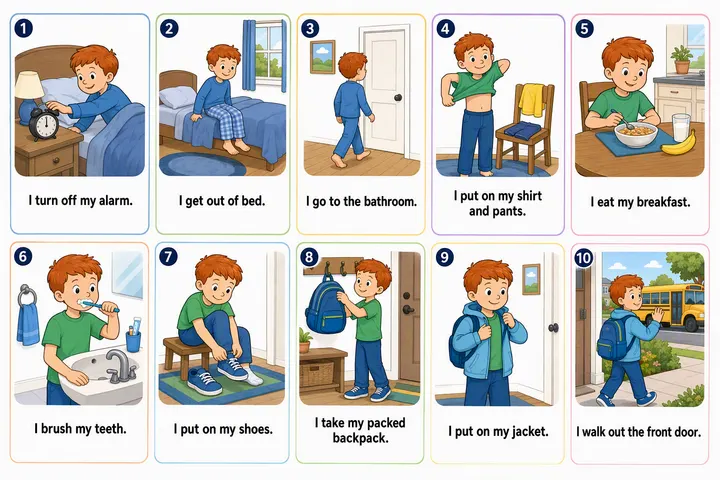
In the moment: follow without chasing loudly, use a short, practiced word, check water first if you lose sight of them, and reconnect gently once they’re back. Once things are calm, identify what triggers it, and prepare for next time with a visual board adapted to your child.
- Autism
- ADHD
- Diagnosed or not
- Ages 2 to 12
Updated
In the moment
Right now
Follow without chasing loudly.
Running and shouting can turn it into a game, or make them run faster. Walk quickly, keep them in sight.
Use a short, practiced word.
A word you have rehearsed at calm times, like “Stop” or “Freeze,” works better than a long call.
Check water first if you lose sight of them.
Many children are drawn to water: pools, ponds, fountains. Look there first and ask people nearby to help.
Reconnect gently once they’re back.
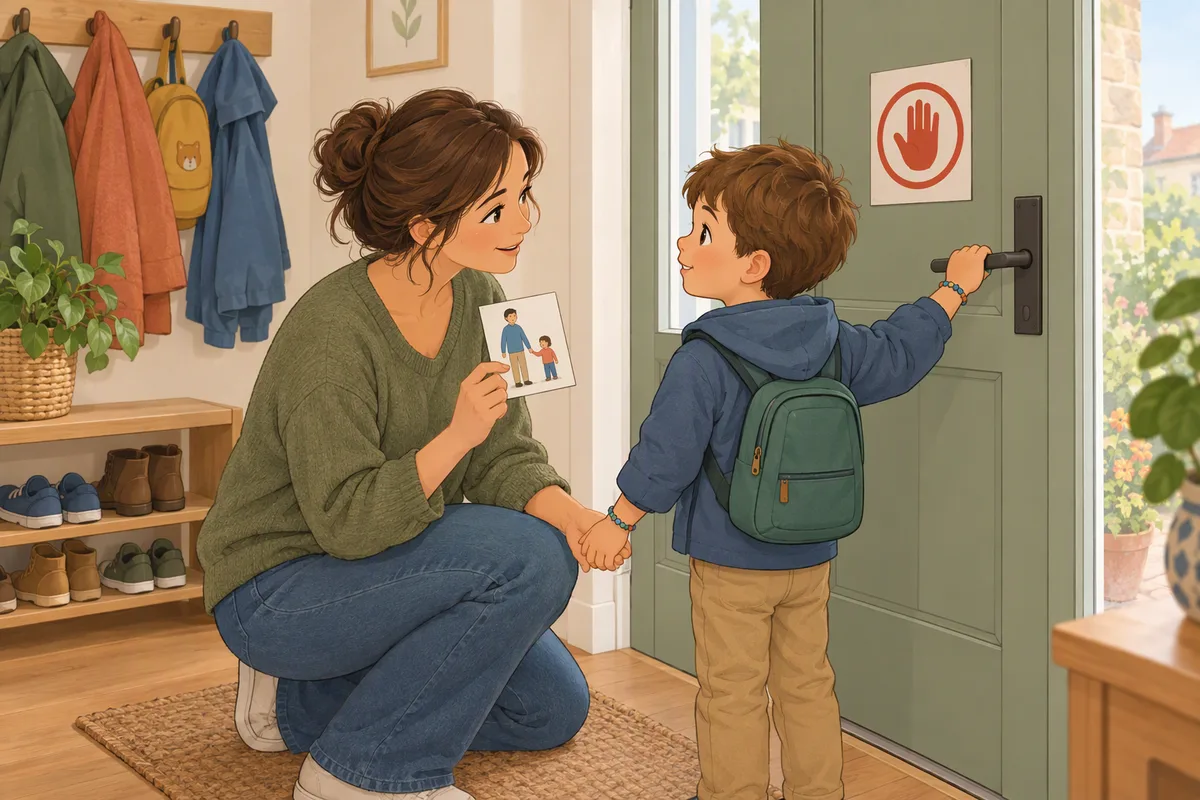
A hand to hold, a calm voice. Scolding now makes the next time harder.
Note what happened just before.
Where they went and what they ran toward tells you a lot for prevention.
What often makes it worse
- Punishing them right after: fear makes the next escape more likely.
- Assuming they understand danger the way you do.
- Waiting to ask for help if you can’t find them: alert people around you and call for help right away.
Understanding it
Why it happens
Toward something they love
What it looks like
They head straight to water, a train, a favorite place.
What helps
Know their favorite spots, and plan visits there together.
Away from something too strong
What it looks like
Noise, crowds, a demand: they leave the room or the store.
What helps
Plan a quiet place and a way to ask for a break.
The thrill of being chased
What it looks like
They look back and laugh, waiting for you to run.
What helps
Don’t chase in play; practice “stop” as a game at calm times.
No sense of danger yet
What it looks like
They cross without looking, approach water without fear.
What helps
Teach safety with pictures, step by step, and practice often.
When to mention it to your pediatrician
Some signs are worth showing your child’s doctor, to check that pain or another cause isn’t behind it.
- It happens often, at home, at school, or at night.
- They don’t seem to understand dangers such as roads or water.
- You need a safety plan with the school: ask for it to be written into their plan (IEP or 504).
- You are losing sleep over it.
When things are calm
For next time
- Question 1 of 3, current
- Question 2 of 3
- Question 3 of 3
Question 1 of 3
Where does it happen most?
The board teaches the rule; safety measures (door locks or alarms, an ID bracelet, swimming lessons) protect in the meantime. A professional can help you build a full safety plan.
Available supports
Library boards and templates suited to this situation, usable right away.
For you
And you, always on alert?
Keeping constant watch is exhausting, and the fear of losing sight of your child can follow you everywhere. Simple safety tools, a plan shared with school and family, and other parents who understand can lighten that load.
If it keeps happening
A parent training program
- PCITParent-Child Interaction Therapy, ages 2 to 7. A therapist coaches you live.
- RUBIFor autistic children with challenging behavior. 11 to 14 sessions.
- Triple PA general program, also available online.
This guide is educational, not medical. It does not replace your child’s doctor or the team that supports your child.