Situation guide · Meltdowns and behavior
My child can’t handle change
For many autistic children, predictability is what makes the world bearable. An unexpected change isn’t a small annoyance: it’s losing their bearings all at once.
In brief
In the moment: name what changed, show what stays the same, give the new plan in pictures, and give them time. Once things are calm, identify what triggers it, and prepare for next time with a visual board adapted to your child.
- Autism
- ADHD
- Diagnosed or not
- Ages 2 to 16
Updated

In the moment
Right now
Name what changed.
“That wasn’t planned. It’s hard.” Naming it helps more than minimizing it.
Show what stays the same.
“The pool is closed, but we’re going home and you’ll have your snack.” Fixed points reassure.
Give the new plan in pictures.
Draw it on paper or show photos: first, then.
Give them time.
Switching plans takes them longer than it takes you. Don’t rush.
Offer a simple choice.
“Walk home or take the bus?” Choosing gives back a bit of control.
What often makes it worse
- Saying “it’s no big deal”: for them, it is.
- Changing something else right after.
- Surprising them on purpose “to get them used to it”: flexibility is learned by preparing, not by surprising.
Understanding it
Why it happens
The surprise
What it looks like
The same change, announced the day before, goes much better.
What helps
Announce ahead, with a picture, even small changes.
Not knowing what comes next
What it looks like
They keep asking “and then?”
What helps
Show the whole sequence: first, then, finally.
Losing something they expected
What it looks like
The planned outing is canceled, they can’t do their activity.
What helps
Say when it will happen instead, and show it on a calendar.
Tiredness
What it looks like
The same change goes fine some days and not others.
What helps
Avoid piling up new things on busy days.
When to mention it to your pediatrician
Some signs are worth showing your child’s doctor, to check that pain or another cause isn’t behind it.
- The smallest change triggers a long meltdown, several times a week.
- They refuse more and more new things, and daily life is shrinking.
- They have rituals that take a lot of time and distress them if they can’t do them.
- A big change is coming (moving, a new baby, a separation): talking about it ahead helps.
When things are calm
For next time
- Question 1 of 3, current
- Question 2 of 3
- Question 3 of 3
Question 1 of 3
Which change is hardest?
A board builds flexibility little by little, at calm times. If changes trigger very frequent meltdowns, a professional can support you.
Available supports
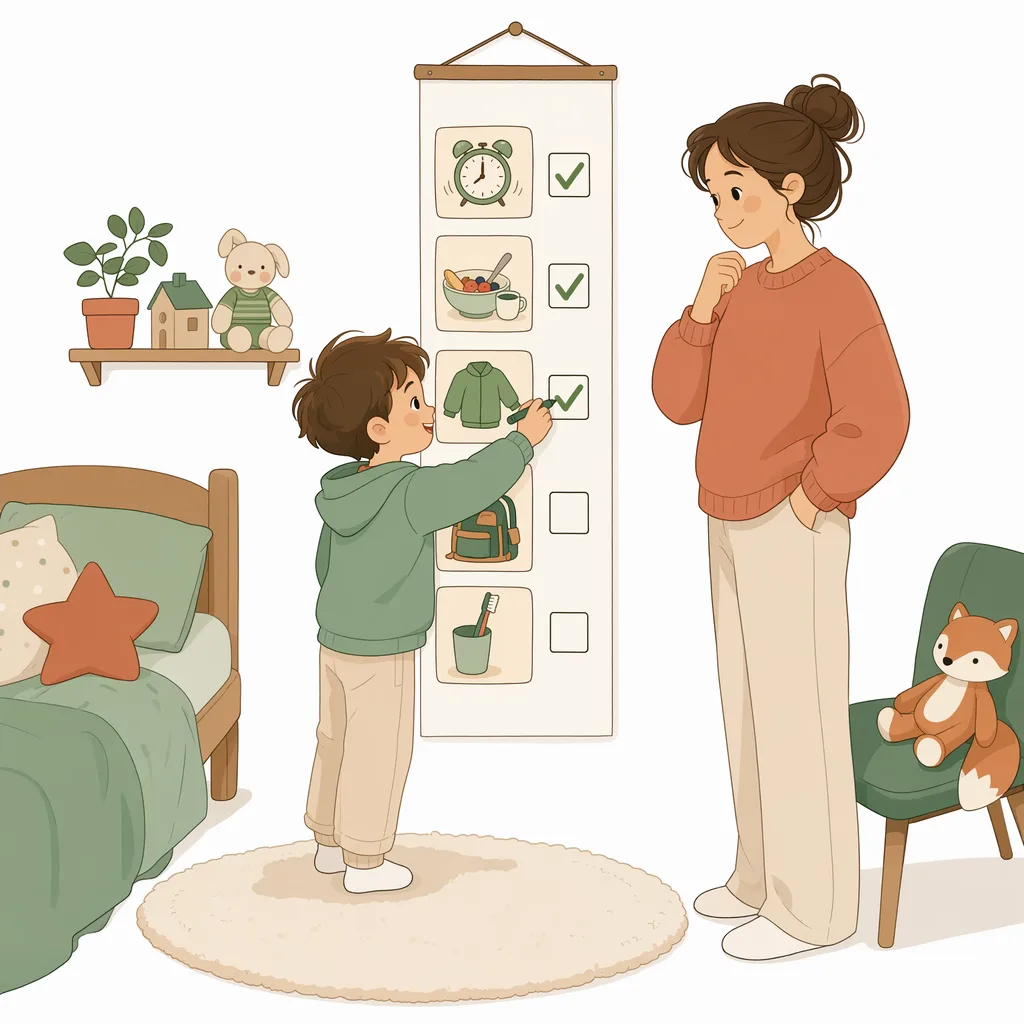
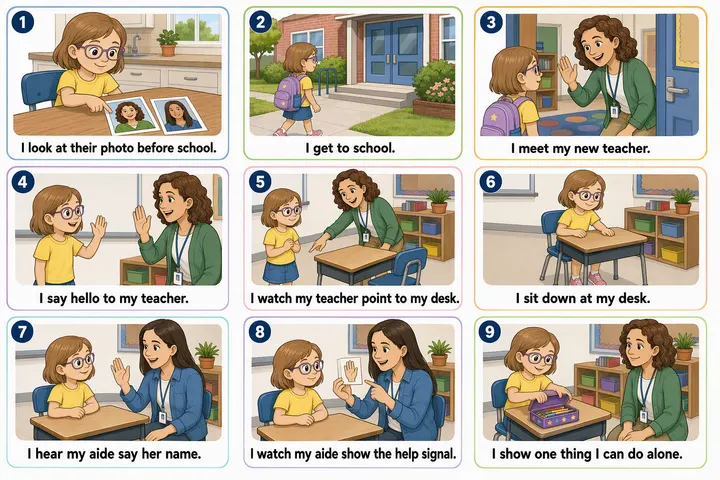
Library boards and templates suited to this situation, usable right away.

For you
And you, managing every surprise?
Anticipating everything, explaining everything, all the time: it’s a huge mental load that others don’t see. You don’t have to plan everything perfectly. Preparing for the most frequent changes already helps a lot.
If it keeps happening
A parent training program
- RUBIFor autistic children with challenging behavior.
- PACTAutism, up to age 10: parent-child communication.
- CST (WHO)Ages 2 to 9, autism or developmental delay.
This guide is educational, not medical. It does not replace your child’s doctor or the team that supports your child.