Situation guide · Outings
Haircuts are a battle
A haircut combines many difficult sensations: clippers buzzing, hair on the skin, a cape, a stranger close to the face, sitting still. Refusal is a reasonable reaction to all of that.
In brief
In the moment: agree on a short haircut, protect the senses that overload, say each step before it happens, and give them something to hold or watch. Once things are calm, identify what triggers it, and prepare for next time with a visual board adapted to your child.
- Autism
- ADHD
- Diagnosed or not
- Ages 2 to 12
Updated
In the moment
Right now
Agree on a short haircut.
Tell the hairdresser: as quick as possible, scissors rather than clippers if the noise bothers them.
Protect the senses that overload.
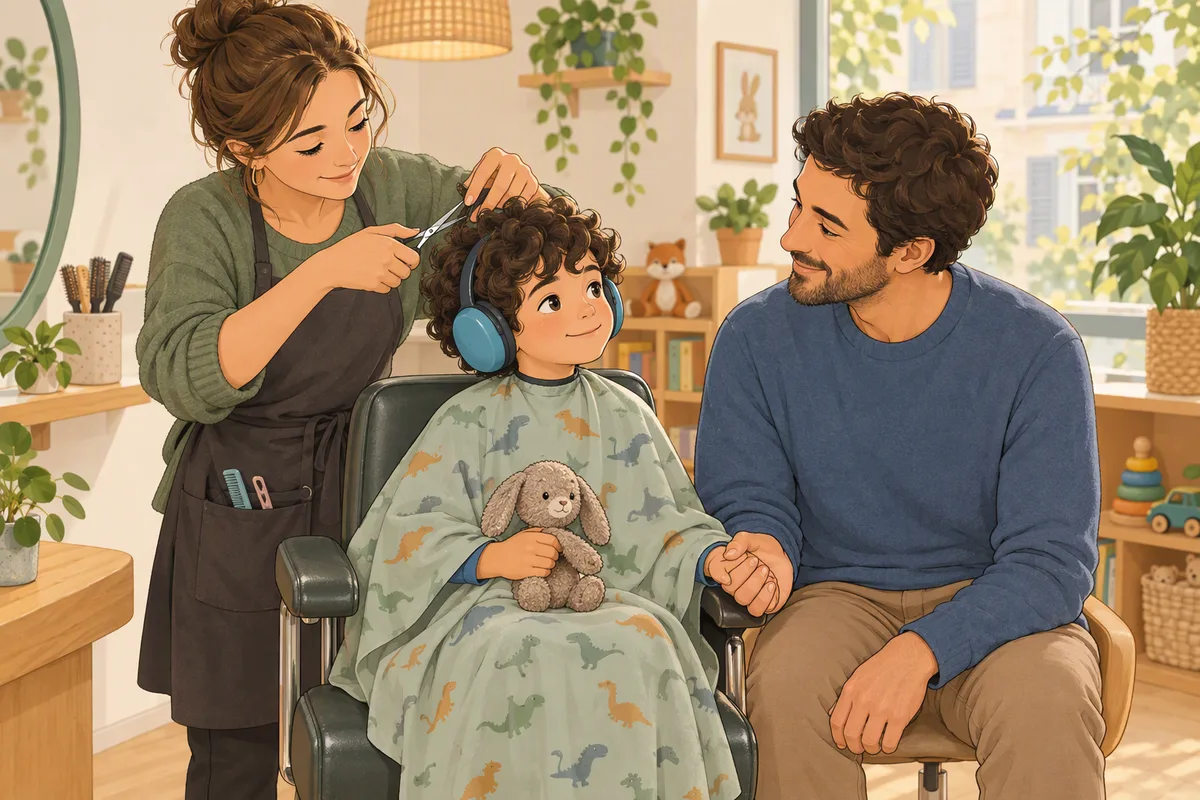
Headphones against the buzzing, a cape that doesn’t scratch, a spray bottle rather than a wash.
Say each step before it happens.
“Now the scissors at the back.” No surprises.
Give them something to hold or watch.
Comfort object, a mirror, a video: attention goes elsewhere.
Stop if it becomes too much.
An unfinished haircut is better than a memory that makes the next one impossible.
What often makes it worse
- Holding their head firmly without warning.
- Promising it will be quick if it won’t be.
- Insisting on finishing while they are in distress.
Understanding it
Why it happens
The noise of the clippers
What it looks like
They pull away as soon as the buzzing starts.
What helps
Scissors only, or headphones and clippers shown and heard first, turned off.
Hair on the skin
What it looks like
They scratch, wriggle, try to take the cape off.
What helps
A smooth cape, a neck strip, a quick brush-off between steps.
Someone close to the face
What it looks like
They tense up when the hairdresser approaches.
What helps
The same hairdresser every time, introduced beforehand, at a quiet hour.
Sitting still
What it looks like
They can’t stay in the chair, especially with ADHD.
What helps
Short haircuts, breaks, a timer to show the end.
When to mention it to your pediatrician
Some signs are worth showing your child’s doctor, to check that pain or another cause isn’t behind it.
- Any touch on the head or face is unbearable, also at home.
- Haircuts, nail trimming and hair washing are all impossible: an occupational therapist can work on sensory tolerance.
When things are calm
For next time
- Question 1 of 3, current
- Question 2 of 3
- Question 3 of 3
Question 1 of 3
What is hardest?
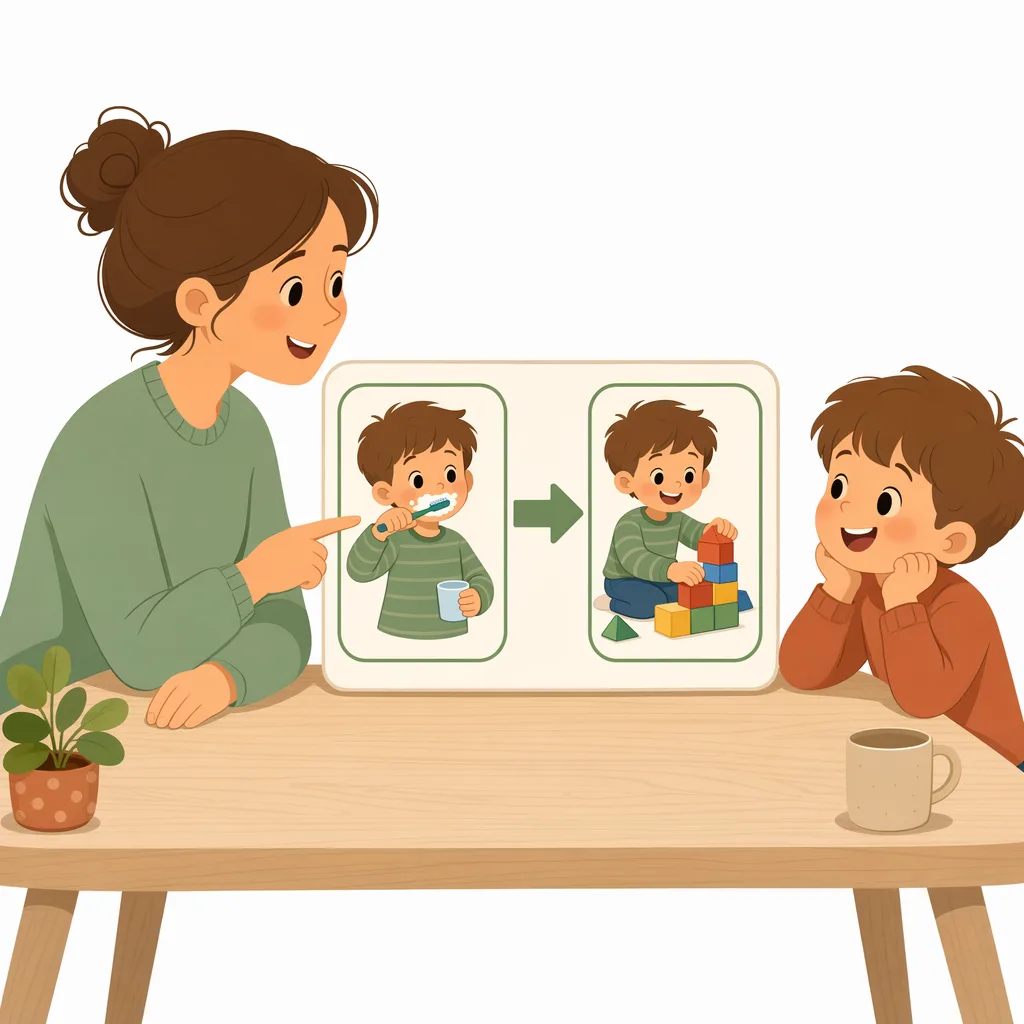
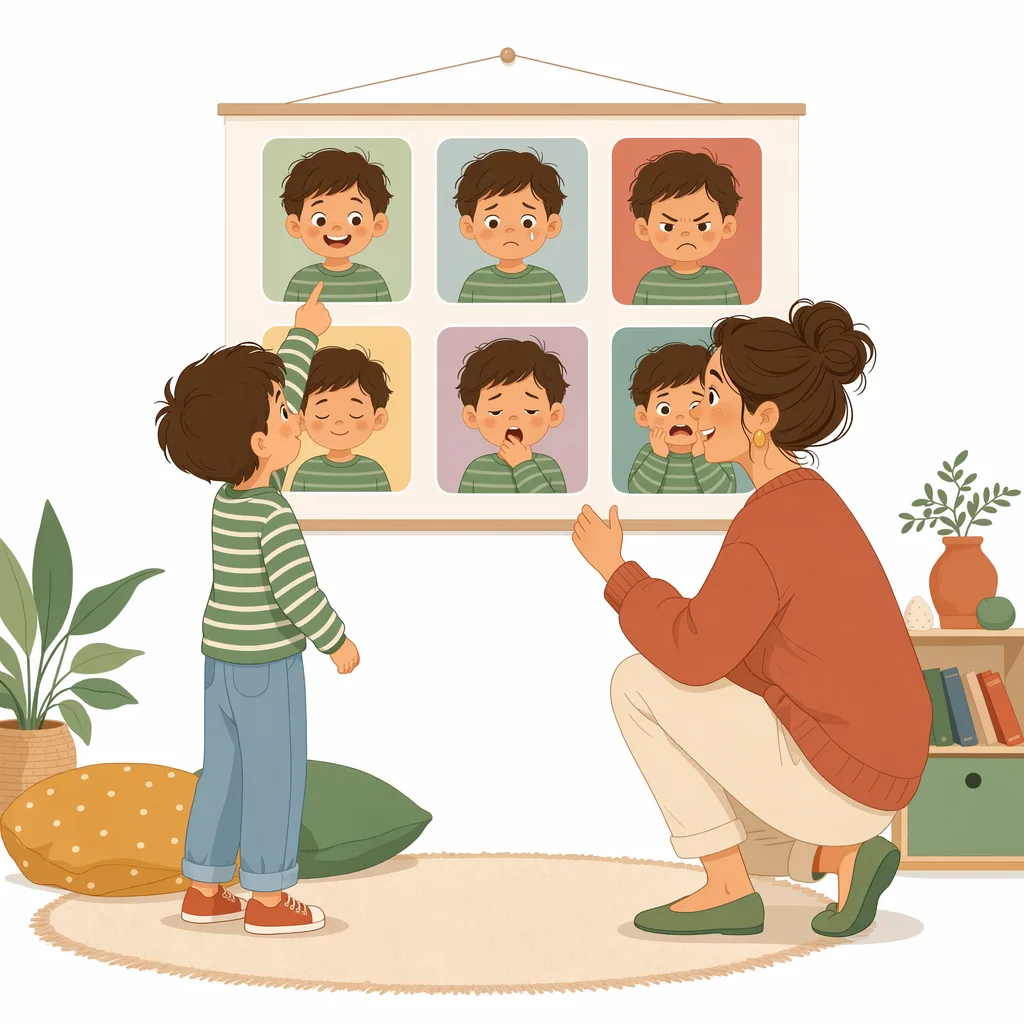
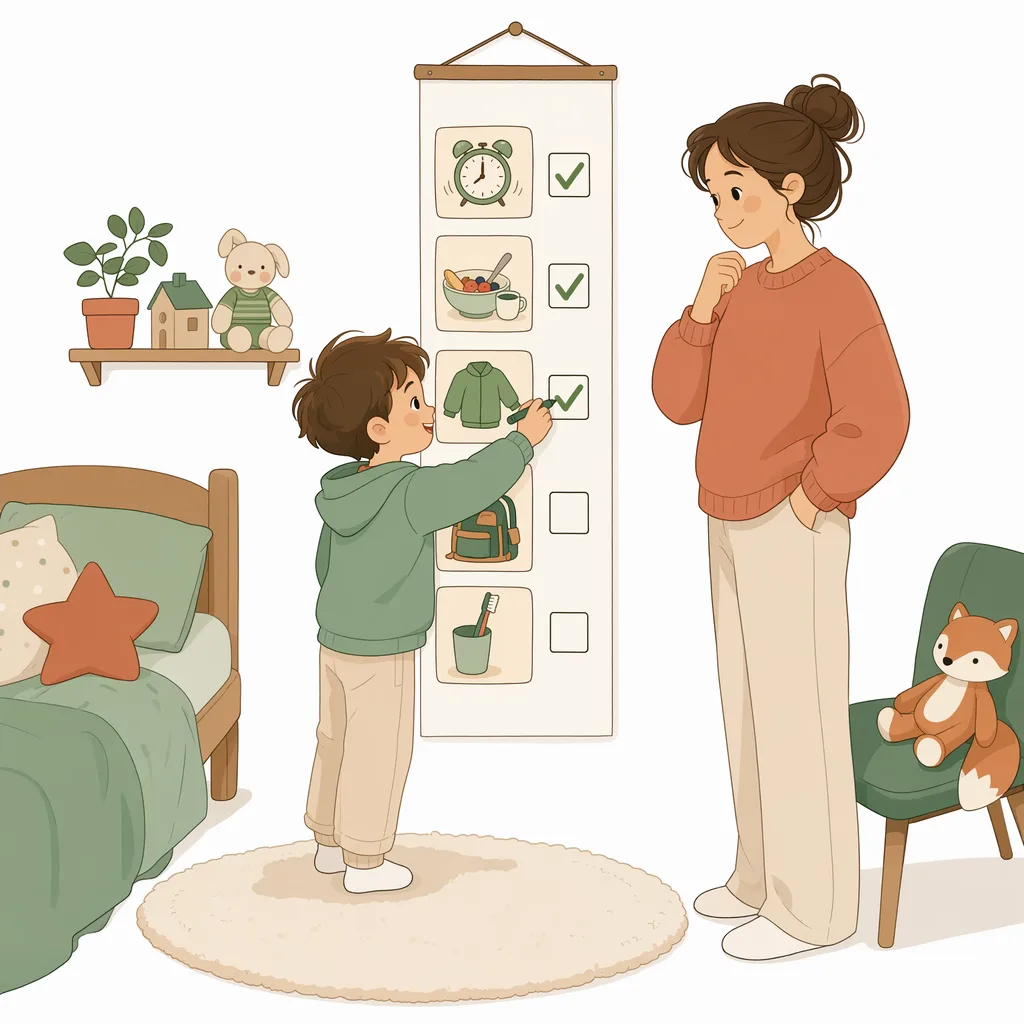
The board prepares the visit. Some salons offer sensory-friendly appointments: it is worth asking.
Available supports
Library boards and templates suited to this situation, usable right away.
For you
And you, at the salon?
A haircut that ends in tears is hard for everyone, including you. Spacing haircuts out, cutting at home, or accepting longer hair for a while are reasonable choices.
If it keeps happening
A parent training program
- Triple P, Incredible YearsGeneral programs: handling new and difficult situations.
- CST (WHO)Ages 2 to 9, autism or developmental delay.
This guide is educational, not medical. It does not replace your child’s doctor or the team that supports your child.