Situation guide · Daily life
My child barely eats
Many autistic and ADHD children eat a very small range of foods. This is not defiance or a lack of authority: textures, smells and novelty can be genuinely difficult for them.
In brief
In the moment: serve at least one food they already eat, place the new food on the side, with no obligation, stop counting bites, and keep meals short and predictable. Once things are calm, identify what triggers it, and prepare for next time with a visual board adapted to your child.
- Autism
- ADHD
- Diagnosed or not
- Ages 2 to 12
Updated
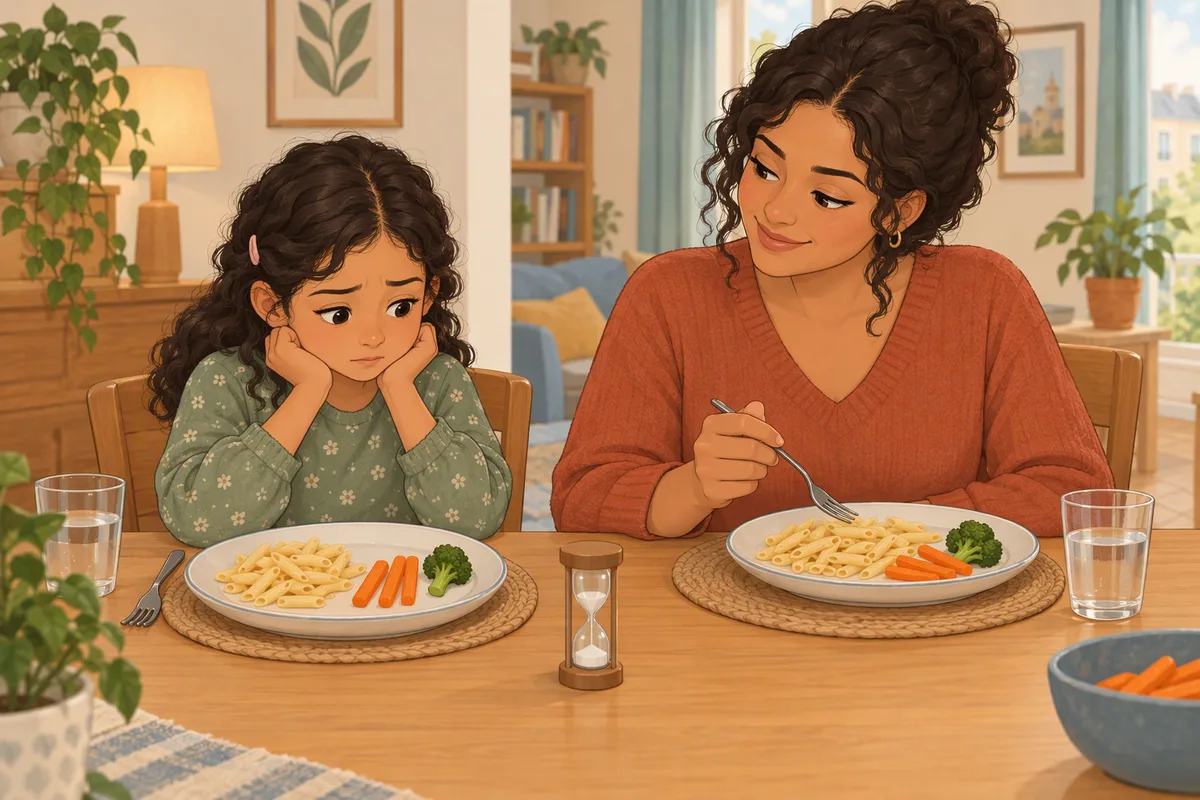
In the moment
Right now
Serve at least one food they already eat.
They know there will be something they can eat. Fear of the meal goes down.
Place the new food on the side, with no obligation.
Seeing, smelling and touching are already steps. Many exposures are often needed before tasting.
Stop counting bites.
No “three more bites,” no bargaining: pressure reduces appetite.
Keep meals short and predictable.
Same seat, same time, twenty to thirty minutes, then move on.
Eat with them, relaxed.
Seeing adults eat and talk about other things is reassuring.
What often makes it worse
- Forcing, punishing, or taking away dessert.
- Hiding foods in what they like: they may refuse the safe food too.
- Commenting on what they eat in front of them or others.
Understanding it
Why it happens
Texture or smell
What it looks like
They refuse soft, mixed or lumpy foods, or certain smells drive them away.
What helps
Keep foods separate on the plate; offer textures close to what they already like.
Fear of new foods
What it looks like
They refuse before tasting, but always accept the same brand or color.
What helps
Small steps: look, touch, smell, lick, taste. No pressure.
The mealtime atmosphere
What it looks like
Noise, conversation, TV, siblings: they leave the table.
What helps
A calmer meal, a fixed seat, headphones if needed.
Not hungry at the right time
What it looks like
They snack during the day, or a medication reduces appetite.
What helps
Regular meal times, and talk to the doctor if a medication plays a role.
When to mention it to your pediatrician
Some signs are worth showing your child’s doctor, to check that pain or another cause isn’t behind it.
- They are losing weight, or no longer growing as expected.
- They eat fewer than about twenty different foods, or the list is shrinking.
- They choke, vomit, or have stomach pain when eating.
- They are often constipated.
- Meals have become a source of stress for the whole family.
When things are calm
For next time
- Question 1 of 3, current
- Question 2 of 3
- Question 3 of 3
Question 1 of 3
What would you like to work on?
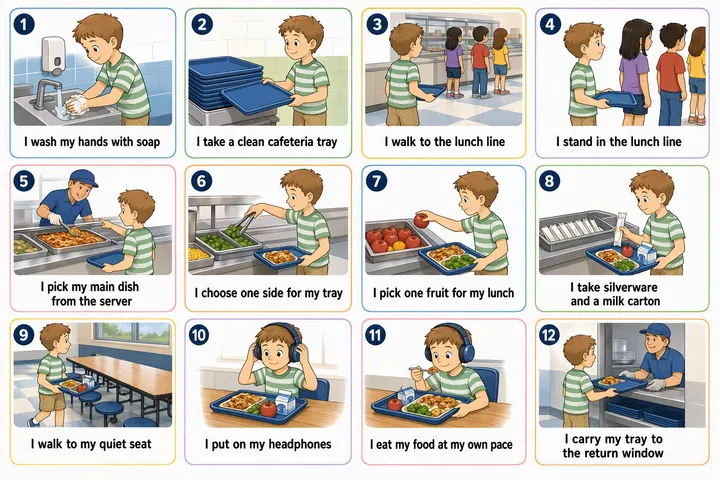
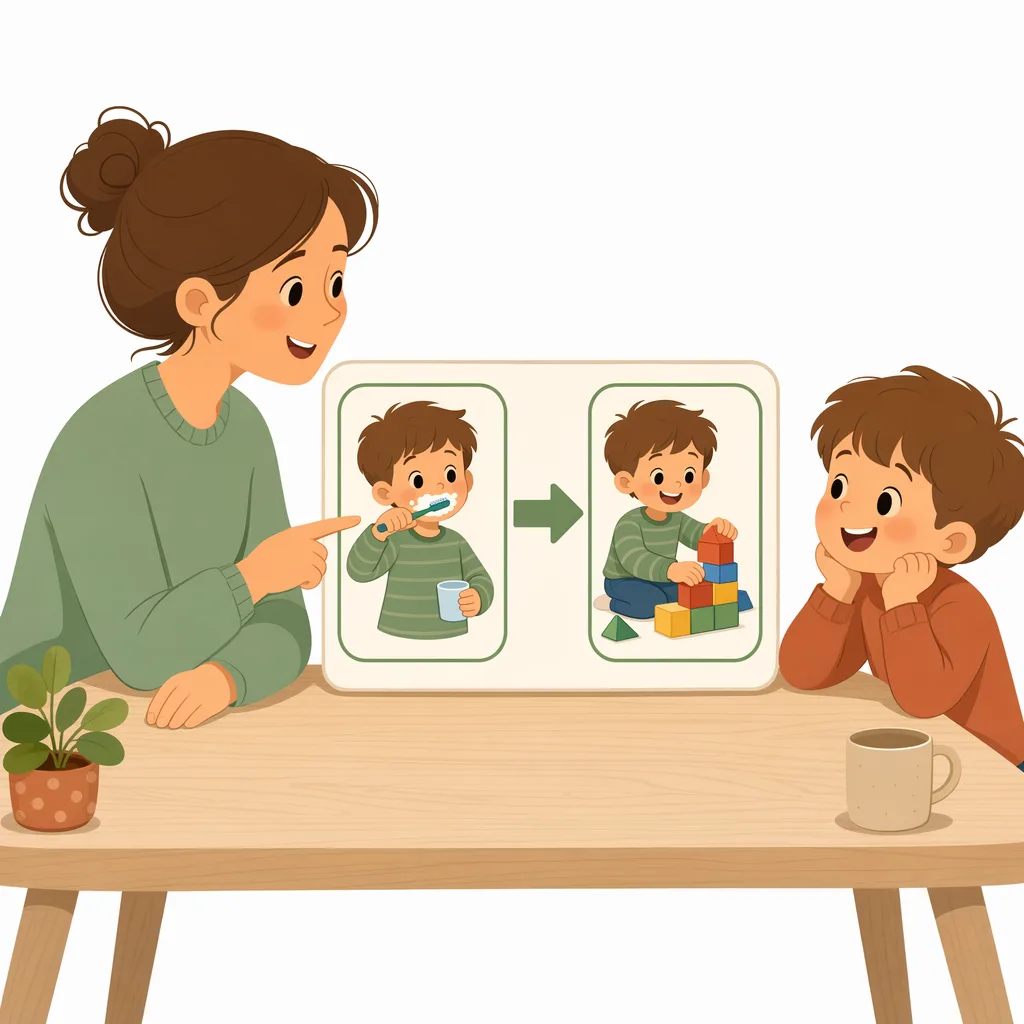
The board reduces anxiety around meals. If their diet is very restricted or they are losing weight, speak with the pediatrician: specialized feeding support exists.
Available supports
Library boards and templates suited to this situation, usable right away.

For you
And you, at the table?
Cooking meals that get refused, worrying about their health, hearing other people’s comments: it is exhausting. A child who eats little but grows well is not in danger. You are doing what you can.
If it keeps happening
A parent training program
- Triple P, Incredible YearsGeneral programs that cover meals and routines.
- CST (WHO)Ages 2 to 9, autism or developmental delay.
This guide is educational, not medical. It does not replace your child’s doctor or the team that supports your child.