Situation guide · Daily life
My child won’t listen
It is not deliberate. For a child with ADHD, catching an instruction among everything else, holding it in mind and starting on it takes far more effort than for other children.
In brief
In the moment: get close and wait for their attention, give one short instruction, ask them to repeat it, and show rather than repeat. Once things are calm, identify what triggers it, and prepare for next time with a visual board adapted to your child.
- ADHD
- Autism
- Diagnosed or not
- Ages 4 to 14
Updated

In the moment
Right now
Get close and wait for their attention.
An instruction called from another room rarely lands. A hand on the shoulder, if they accept it.
Give one short instruction.
“Put on your shoes.” Not three things at once.
Ask them to repeat it.
“What do you need to do?” You will know whether it was received.
Show rather than repeat.
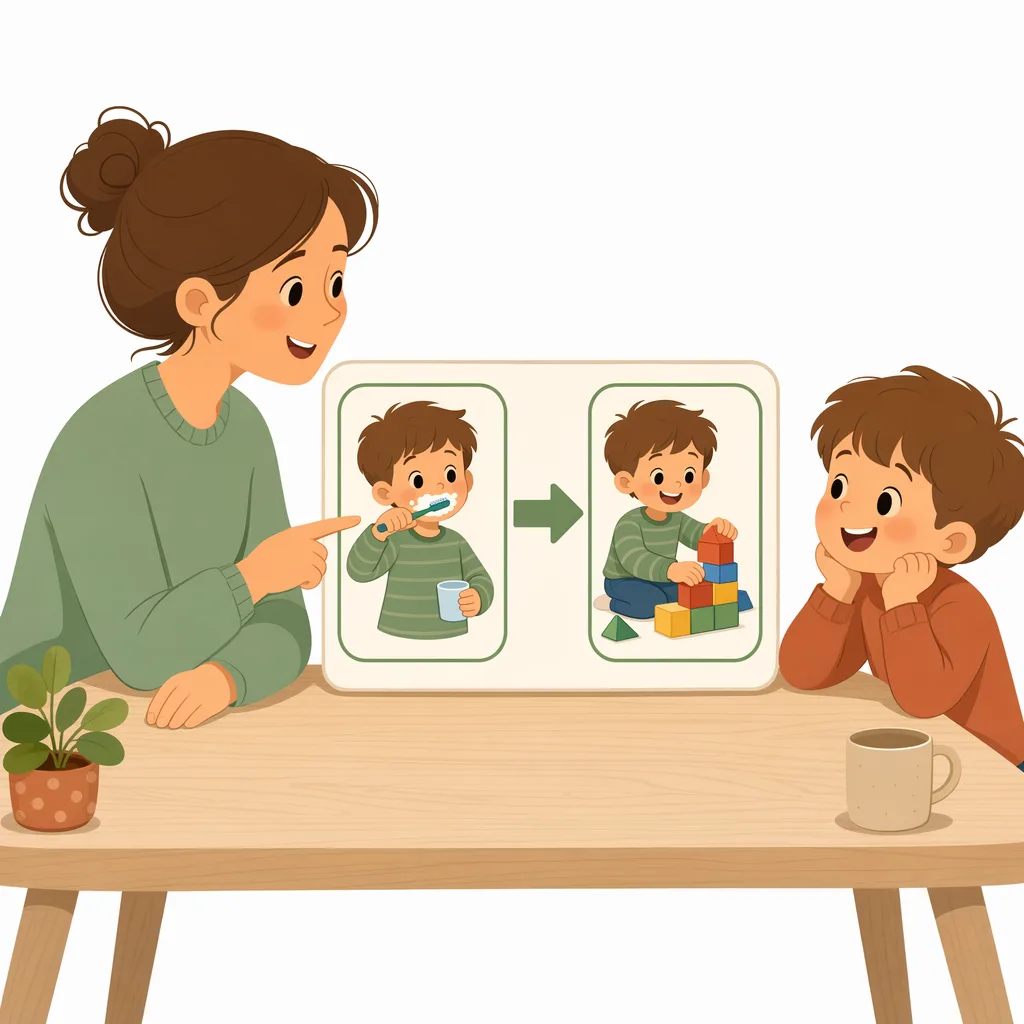
A gesture, a picture, the object in hand: what they see stays when words fade.
Acknowledge it as soon as it is done.
“You put your shoes on the first time.” Specific feedback counts more than a comment when it goes wrong.
What often makes it worse
- Shouting or repeating louder and louder.
- Chained instructions: “tidy up, wash your hands and come eat.”
- Comments about who they are (“you’re impossible”) instead of what they do.
Understanding it
Why it happens
The instruction never arrived
What it looks like
They were absorbed, the instruction came from far away, or it was noisy.
What helps
Get to their level, catch their attention, then speak.
They forgot it on the way
What it looks like
They go to get their shoes and come back with a toy.
What helps
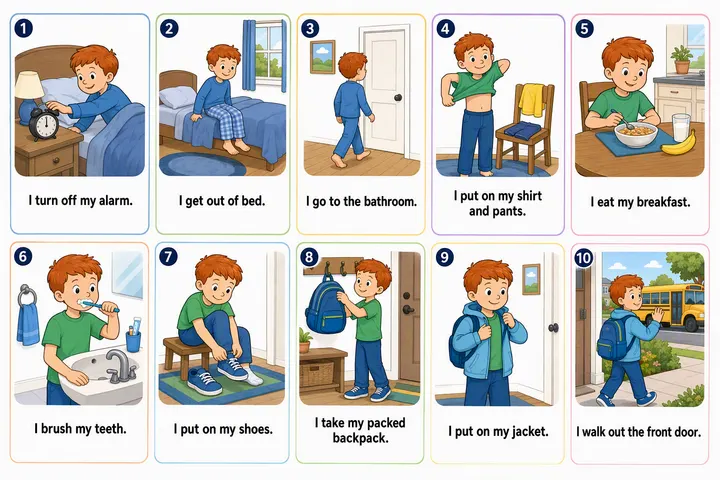
One instruction at a time, and the steps in pictures where it happens.
Stopping is too hard
What it looks like
They hear, but can’t let go of what they’re doing, especially a screen.
What helps
Warn ahead, a visible timer, then the instruction.
They say no
What it looks like
They understood and refuse, especially when tired or frustrated.
What helps
Offer a choice, avoid power struggles, acknowledge when it works.
When to mention it to your pediatrician
Some signs are worth showing your child’s doctor, to check that pain or another cause isn’t behind it.
- They seem not to hear, even sounds they like: have their hearing checked.
- They don’t understand instructions, even simple ones in a quiet setting: a language assessment can help.
- School also reports that they “don’t listen”: the doctor can propose an evaluation.
- Conflict is constant and the whole family is worn out.
When things are calm
For next time
- Question 1 of 3, current
- Question 2 of 3
- Question 3 of 3
Question 1 of 3
Where do you repeat yourself most?
The board replaces repetition, not support. If conflict is daily, a parent training program for ADHD teaches tools that work over time.
Available supports
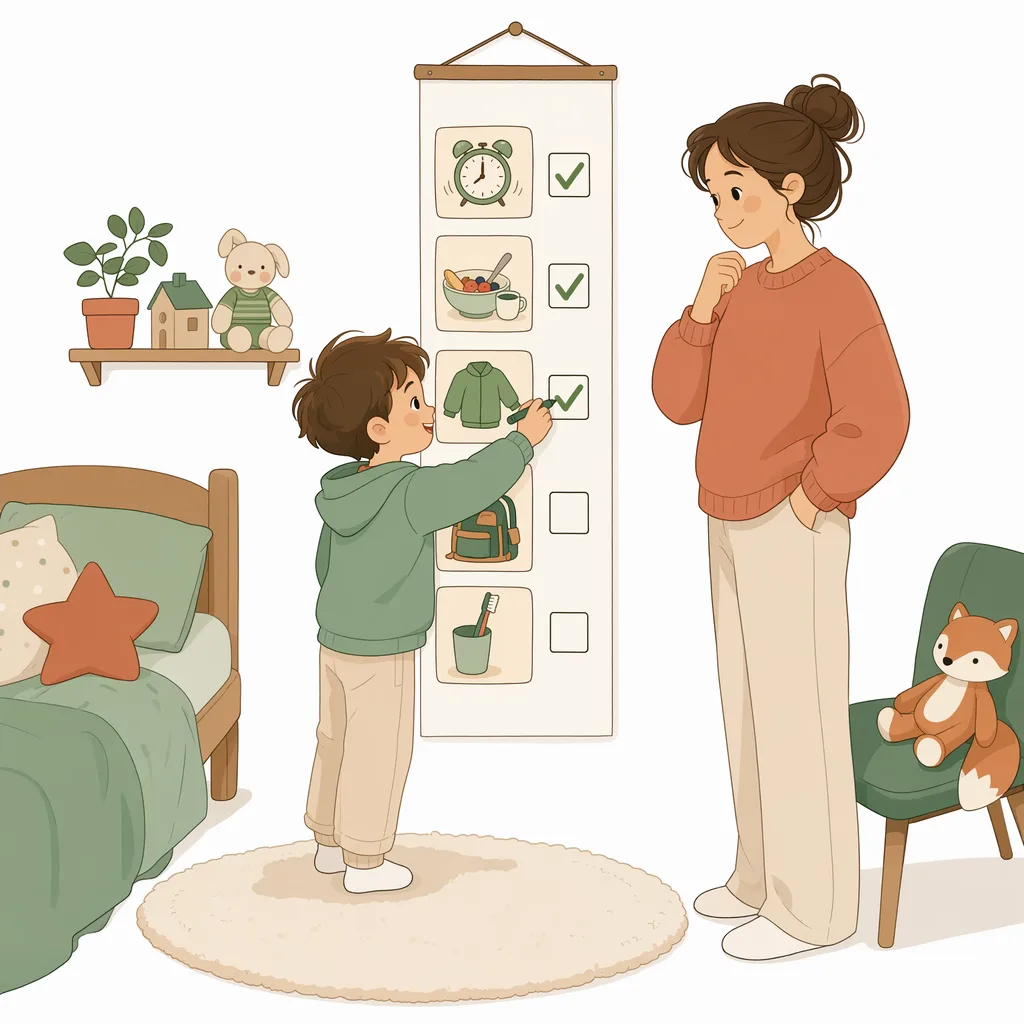
Library boards and templates suited to this situation, usable right away.
For you
And you, how many times today?
Repeating yourself all day wears you down, and shouting happens without meaning to. This is not a failure: it is a sign that a different tool is needed, not more effort. Also note the moments when it works: there are some.
If it keeps happening
A parent training program
- BarkleyChildren with ADHD. 8 to 10 sessions, group or individual.
- PCITAges 2 to 7: clear instructions and positive attention, coached live.
- Triple PA general program, also available online.
This guide is educational, not medical. It does not replace your child’s doctor or the team that supports your child.