Situation guide · Daily life
My child won’t get dressed
This is not unwillingness. An itchy tag, a tight sweater, leaving soft pajamas or stopping play: for many children, getting dressed is genuinely difficult.
In brief
In the moment: offer a choice between two items, one step at a time, check what is bothering them, and turn it into a gentle race against the clock. Once things are calm, identify what triggers it, and prepare for next time with a visual board adapted to your child.
- Autism
- ADHD
- Diagnosed or not
- Ages 3 to 12
Updated
In the moment
Right now
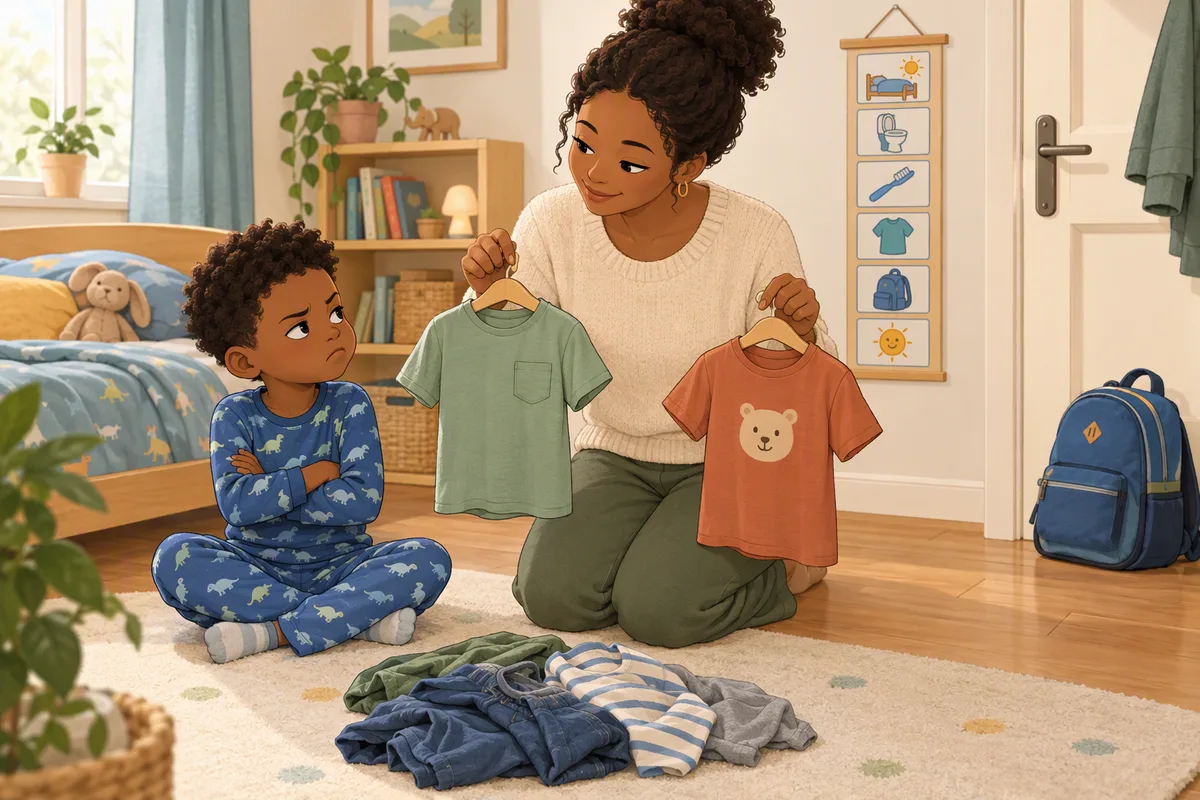
Offer a choice between two items.
“Blue or green?” Choosing restores some control, and the refusal loses its purpose.
One step at a time.
“First the T-shirt.” Show it. The rest comes after.
Check what is bothering them.
A tag, a seam, a scratchy fabric: cut the tag, change the item.
Turn it into a gentle race against the clock.
“Think you can get your socks on before the sand timer runs out?” A game helps them start.
Acknowledge each item put on.
Specific feedback at each step counts more than a comment on what remains.
What often makes it worse
- Dressing them by force: the distress escalates, and the next morning gets harder.
- Threats about the rest of the day.
- Commenting on their slowness in front of siblings.
Understanding it
Why it happens
Sensations
What it looks like
They pull at their collar, take off their socks, tolerate only certain clothes.
What helps
Soft clothes, no tags or rough seams, the same ones every day if needed.
Leaving what they’re doing
What it looks like
They refuse mainly while playing, or when getting out of bed.
What helps
Warn ahead, a visible timer, dress before screens and games.
Too many steps at once
What it looks like
They start, get lost, stop halfway.
What helps
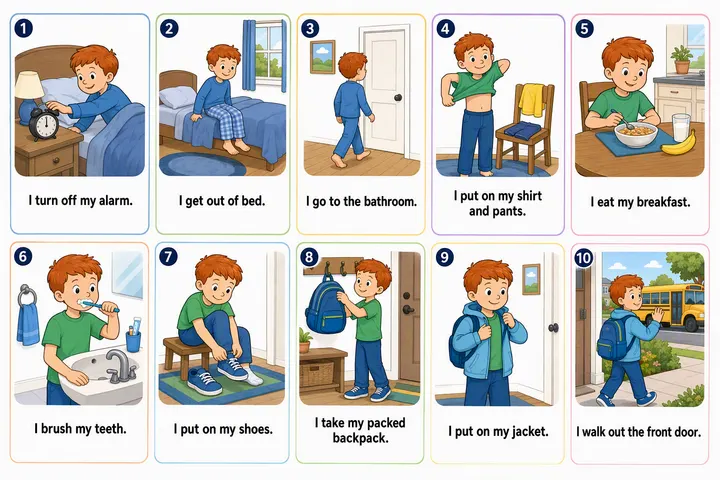
Clothes laid out in order, and a board of the steps beside them.
The movements are difficult
What it looks like
They get frustrated with buttons, zippers, socks.
What helps
Easy-to-put-on clothes, and time to learn one movement at a time.
When to mention it to your pediatrician
Some signs are worth showing your child’s doctor, to check that pain or another cause isn’t behind it.
- Many clothes are unbearable, even soft ones, and it prevents going out.
- The movements themselves are hard: buttons, zippers, a sleeve, at an age when peers manage.
- Mornings turn into meltdowns almost every day, and the family is worn out.
- It’s new, or it suddenly got worse.
When things are calm
For next time
- Question 1 of 3, current
- Question 2 of 3
- Question 3 of 3
Question 1 of 3
What is hardest?
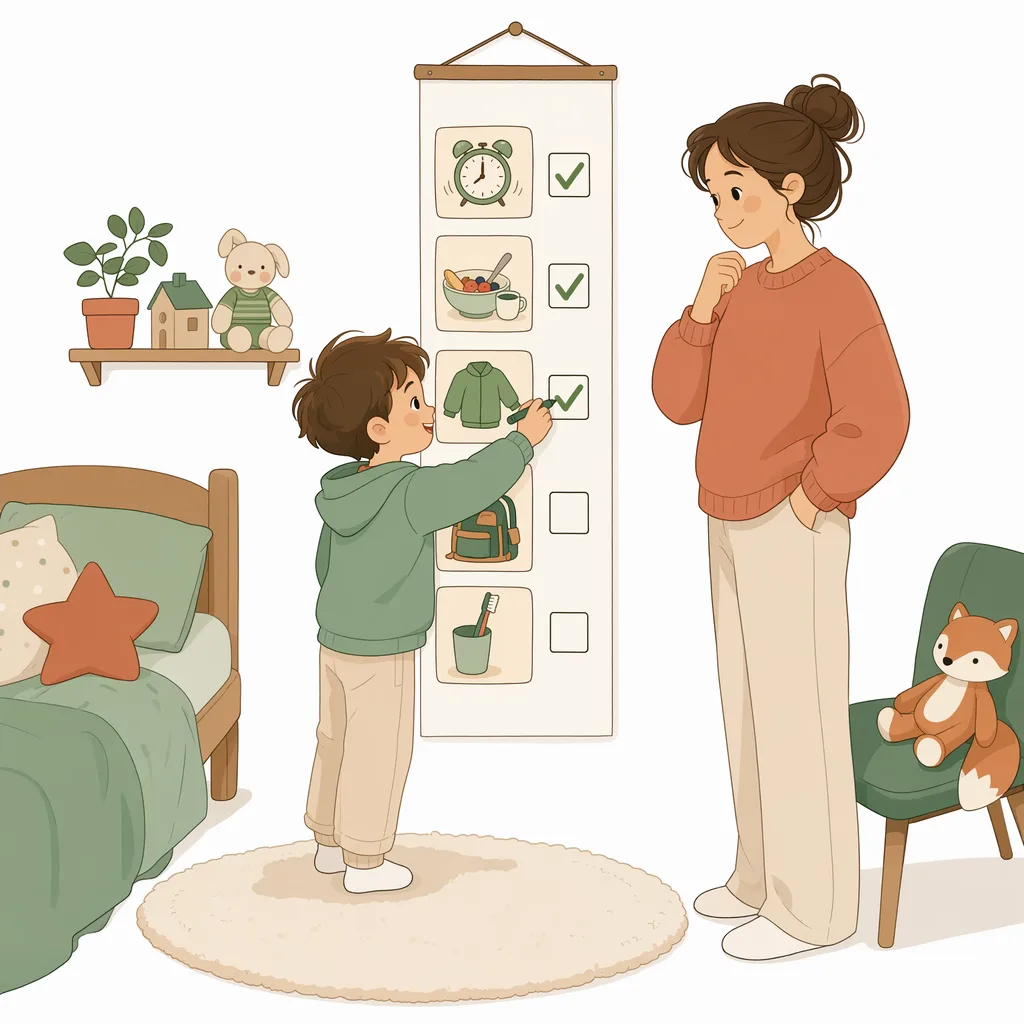
The board structures the morning. If certain clothes remain unbearable or the movements are very difficult, an occupational therapist can help.
Available supports
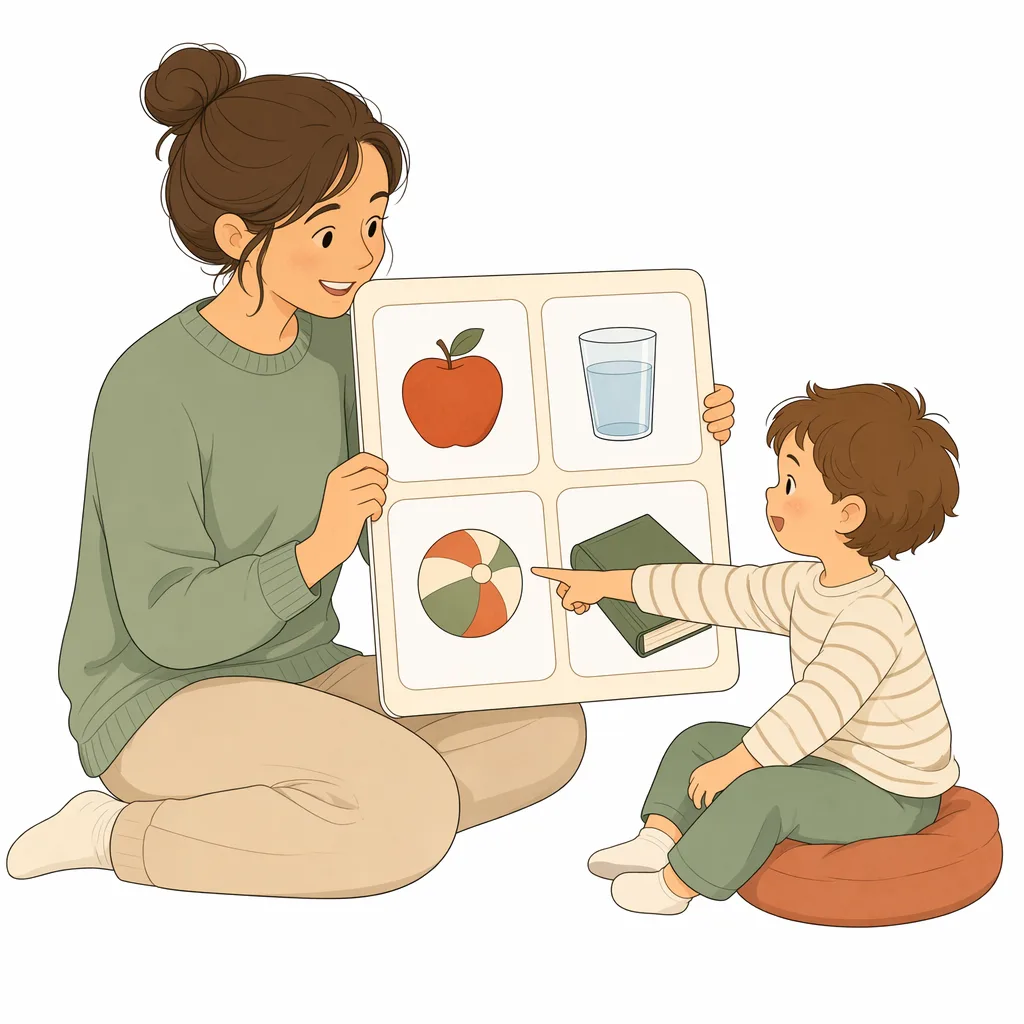
Library boards and templates suited to this situation, usable right away.
For you
And you, these mornings?
Rushed mornings, with work and school waiting, are among the tensest moments. Preparing the night before, waking ten minutes earlier, accepting the same T-shirt three days in a row: these are real solutions, not giving in.
If it keeps happening
A parent training program
- Triple P, Incredible YearsGeneral programs that cover morning routines.
- CO-OPCoordination difficulties: getting dressed, writing, riding a bike.
- BarkleyChildren with ADHD: organizing daily life.
This guide is educational, not medical. It does not replace your child’s doctor or the team that supports your child.