Situation guide · Daily life
My child won’t brush their teeth
For many children, brushing is a strong sensory experience: the taste of toothpaste, the bristles, the foam, something in the mouth. Refusal is usually discomfort, not defiance.
In brief
In the moment: let them hold the brush first, keep it short and visible, adjust what bothers them, and say each step before you do it. Once things are calm, identify what triggers it, and prepare for next time with a visual board adapted to your child.
- Autism
- ADHD
- Diagnosed or not
- Ages 2 to 12
Updated
In the moment
Right now
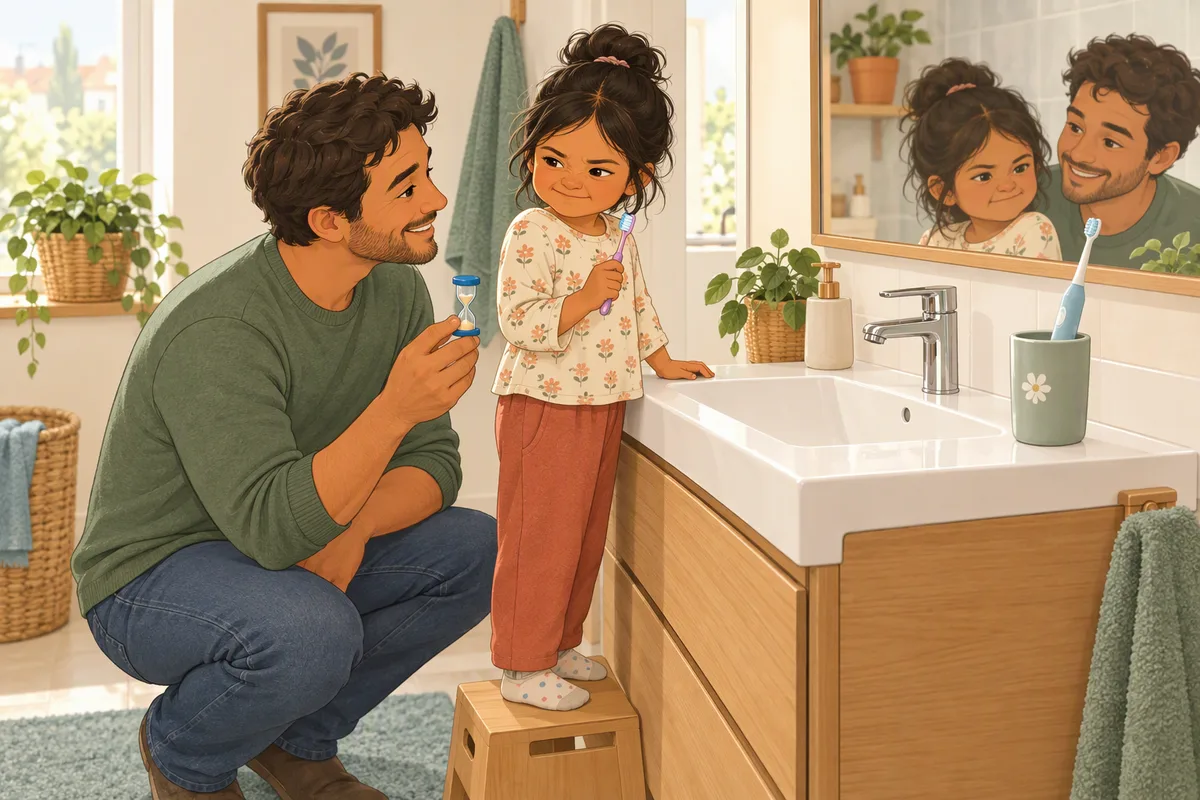
Let them hold the brush first.
Brushing on their own, even briefly, gives them control. You can finish afterwards.
Keep it short and visible.
A sand timer or a song: brushing has a clear end.
Adjust what bothers them.
A mild or unflavored toothpaste, a very soft brush, a smaller amount of paste.
Say each step before you do it.
“Now the top teeth.” No surprises in the mouth.
End with something they like.
The memory of the end shapes the next time.
What often makes it worse
- Holding their head to force the brush in.
- Changing toothpaste or brush without warning.
- Turning it into a long negotiation every night.
Understanding it
Why it happens
Taste and foam
What it looks like
They spit immediately, gag, or refuse a certain toothpaste.
What helps
Mild or unflavored toothpaste, a pea-sized amount, let them rinse.
The feel of the bristles
What it looks like
They pull away as soon as the brush touches the gums.
What helps
A very soft brush, or a silicone brush; some children prefer electric, others not.
Not knowing how long it lasts
What it looks like
They ask to stop after a few seconds.
What helps
A visual timer or a two-minute song.
The end of the day
What it looks like
It goes better in the morning than at night.
What helps
Brush earlier in the evening routine, before they are too tired.
When to mention it to your pediatrician
Some signs are worth showing your child’s doctor, to check that pain or another cause isn’t behind it.
- Brushing has become impossible for several days.
- They seem to have tooth pain, bleeding gums, or avoid chewing on one side.
- They have not seen a dentist in over a year: ask for a dentist experienced with autistic children.
When things are calm
For next time
- Question 1 of 3, current
- Question 2 of 3
- Question 3 of 3
Question 1 of 3
What is hardest?
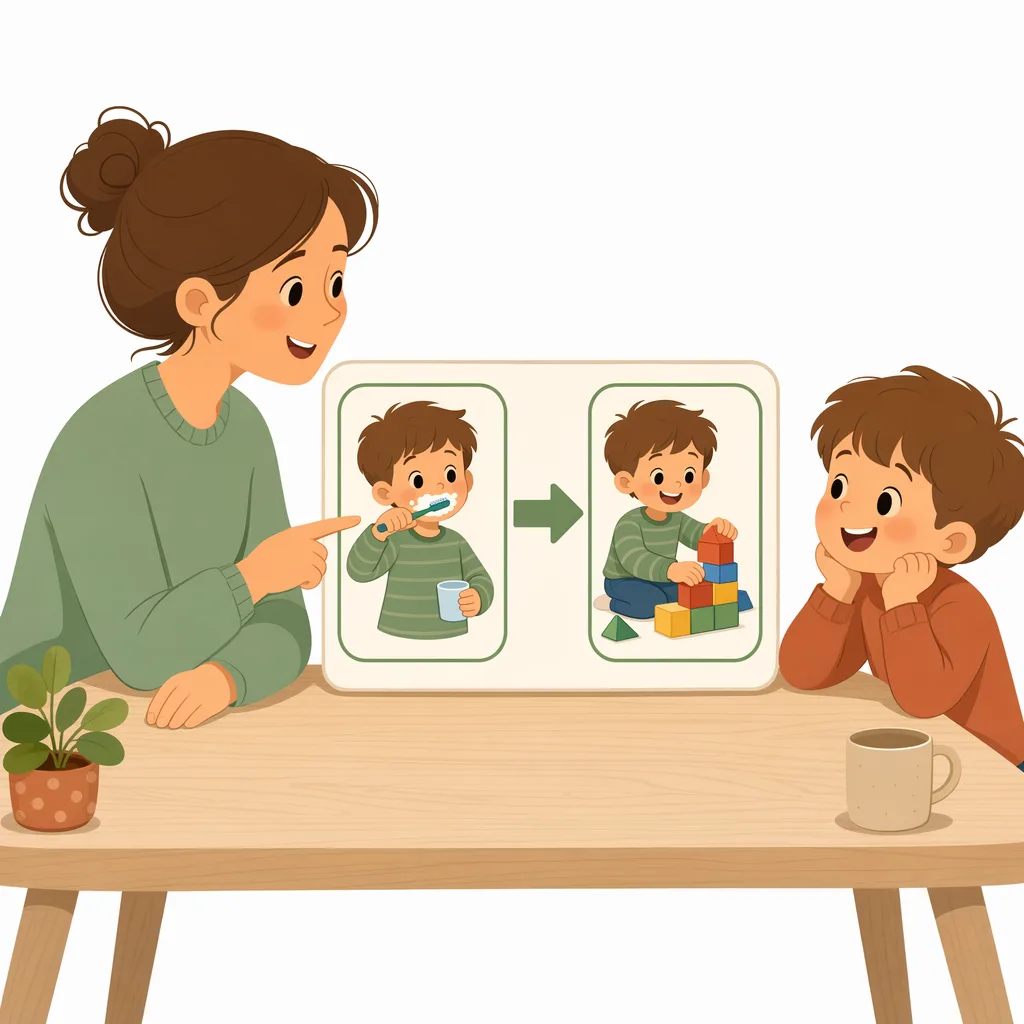
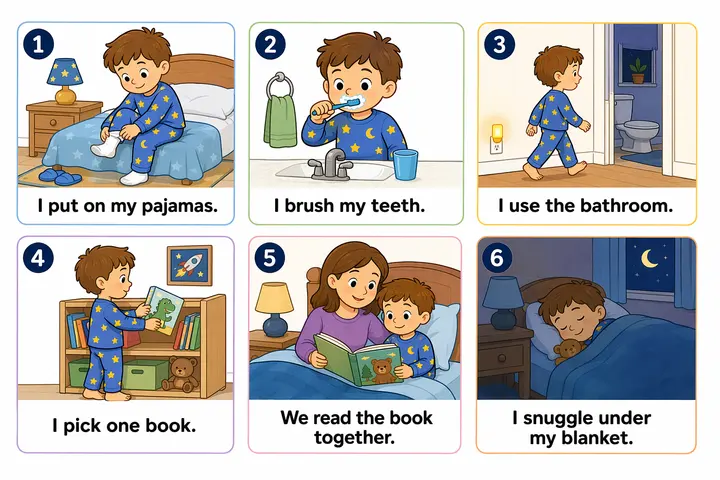
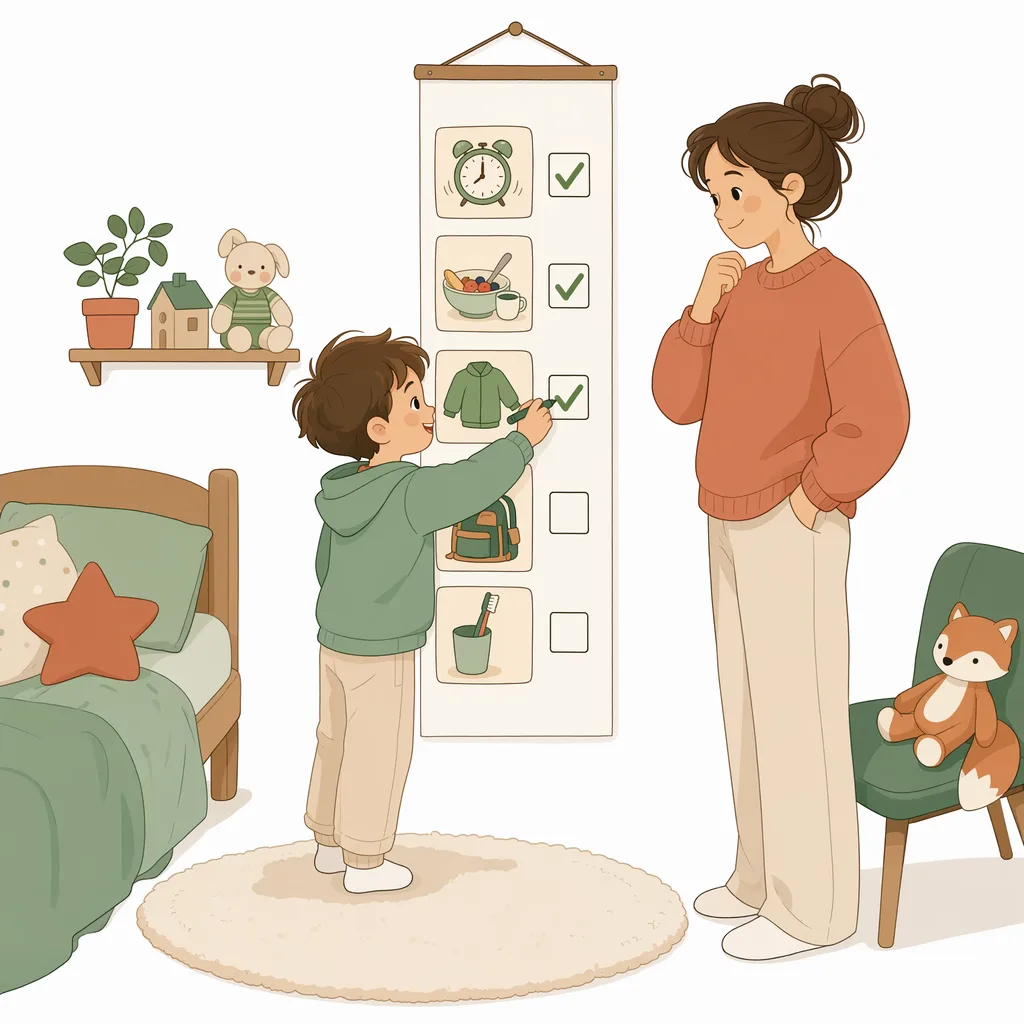
The board makes brushing predictable. If refusal persists or you notice dental pain, a pediatric dentist used to autistic children can help.
Available supports
Library boards and templates suited to this situation, usable right away.
For you
And you, every evening?
A daily battle at the sink wears everyone down. A shorter brushing that is tolerated every day is a real step forward. You do not have to win it all at once.
If it keeps happening
A parent training program
- Triple P, Incredible YearsGeneral programs that cover daily routines.
- CST (WHO)Ages 2 to 9, autism or developmental delay.
This guide is educational, not medical. It does not replace your child’s doctor or the team that supports your child.