Situation guide · Daily life
My child won’t sleep
Sleep difficulties are very common in autistic and ADHD children. They do not reflect a lack of authority, and they often improve with a few consistent routines.
In brief
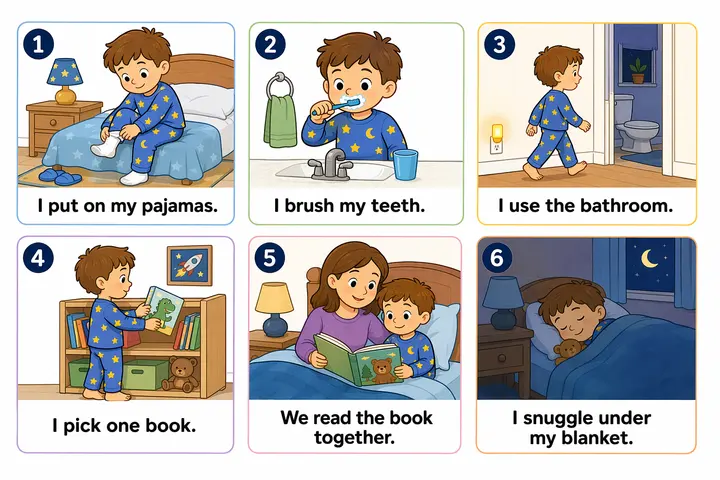
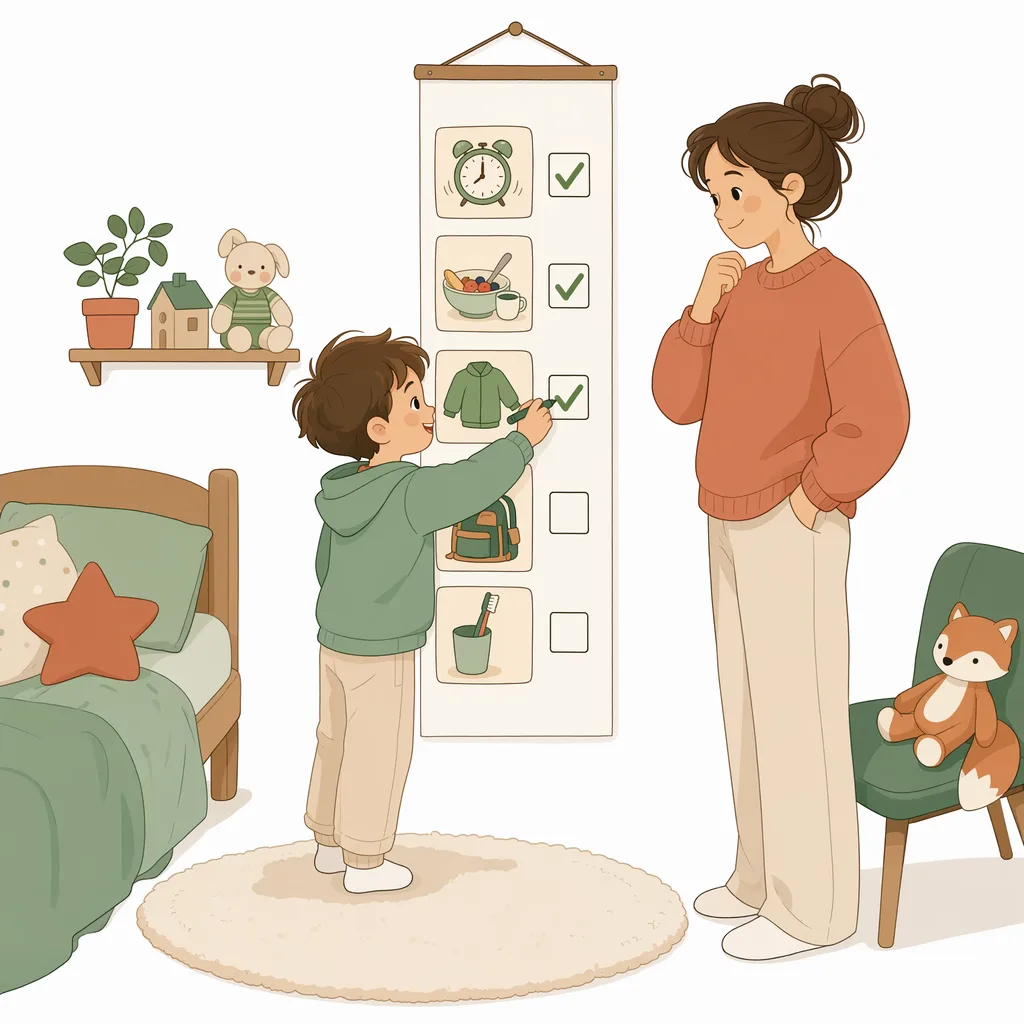
In the moment: dim the lights and turn off screens, use one calm sentence, always the same, offer what usually soothes them, and stay close without stimulating. Once things are calm, identify what triggers it, and prepare for next time with a visual board adapted to your child.
- Autism
- ADHD
- Diagnosed or not
- Ages 2 to 12
Updated

In the moment
Right now
Dim the lights and turn off screens.
Soft, warm light signals night to the body. Screens do the opposite.
Use one calm sentence, always the same.
“It’s time to sleep. I’m nearby.” Discussion and negotiation keep the brain awake.
Offer what usually soothes them.
Comfort object, soft music, a short story. One thing at a time.
Stay close without stimulating.
Sit by the bed, few words, little eye contact. Over the following nights, you can move a little farther away.
Accept an imperfect night.
Resting quietly in bed still counts. Tomorrow, keep the usual wake-up time.
What often makes it worse
- Screens in the hour before bed.
- Threats at bedtime: the bed must remain a safe place.
- Changing the method every night: consistency matters more than the method itself.
Understanding it
Why it happens
The body doesn’t slow down
What it looks like
At bedtime they move, talk and laugh, as if they had a burst of energy.
What helps
A calm hour before bed, always in the same order: bath, pajamas, story.
Too much stimulation
What it looks like
Light, household noise, pajamas or a tag that itches.
What helps
Darkness, steady soft sound, soft clothes, a tidy room.
Evening worries
What it looks like
They ask the same questions, want to know about tomorrow, don’t want you to leave.
What helps
Show tomorrow’s plan before bed, and a short goodbye that never changes.
A shifted rhythm
What it looks like
They fall asleep late and wake late, or nap for a long time.
What helps
Fixed wake-up and bed times, weekends included, and daylight in the morning.
When to mention it to your pediatrician
Some signs are worth showing your child’s doctor, to check that pain or another cause isn’t behind it.
- They snore loudly, pause while breathing, or sweat heavily at night.
- Falling asleep takes more than an hour on most nights.
- They wake for long periods every night, or very early, and daytime suffers.
- Their legs move a lot at bedtime, or they seem to be in pain at night.
- Sleep changed suddenly.
When things are calm
For next time
- Question 1 of 3, current
- Question 2 of 3
- Question 3 of 3
Question 1 of 3
What is hardest?
The board builds landmarks. If sleep remains very difficult after a few weeks of consistent routine, speak with the pediatrician: specific support exists.
Available supports
Library boards and templates suited to this situation, usable right away.

For you
And your nights?
When a child sleeps poorly, parents do too, and everything becomes harder the next day. If there are two of you, alternating evenings helps. You are allowed to say that you are exhausted.
If it keeps happening
A parent training program
- Triple P, Incredible YearsGeneral programs that cover daily routines.
- BarkleyChildren with ADHD: organizing daily life and evenings.
This guide is educational, not medical. It does not replace your child’s doctor or the team that supports your child.